
Last updated on April 22, 2026
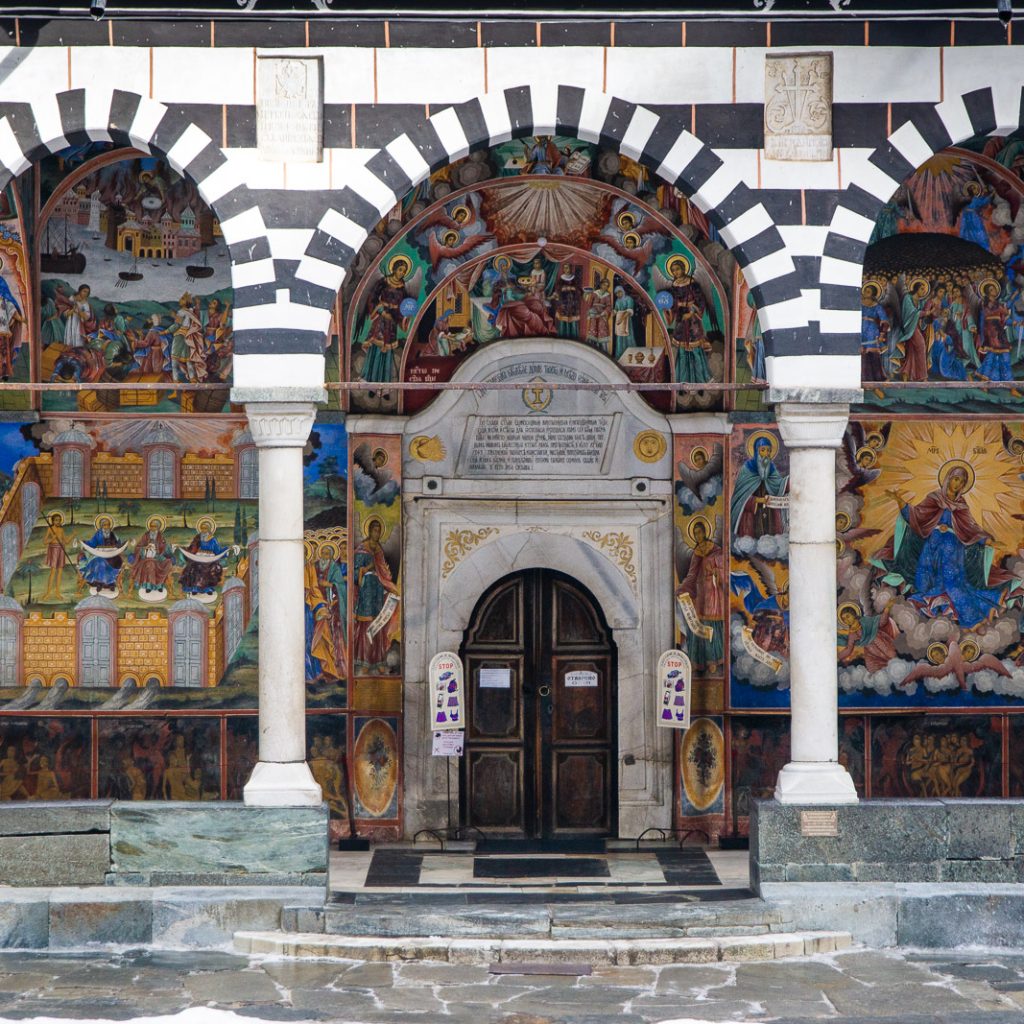
About Rila Monastery (St. John of Rila Monastery)
Rila Monastery is one of the central cultural landmarks in Bulgaria, often described locally as a
“national treasury” rather than just a religious site.
It was founded in the 10th century by St. Ivan (John) of Rila, a hermit later canonized by the Orthodox Church. What began as his ascetic dwelling and burial place gradually developed into a monastic complex, becoming a lasting center of spiritual and social life in medieval Bulgaria.
That role hasn’t really disappeared – it’s still seen as a place that preserves and reflects Bulgarian identity.
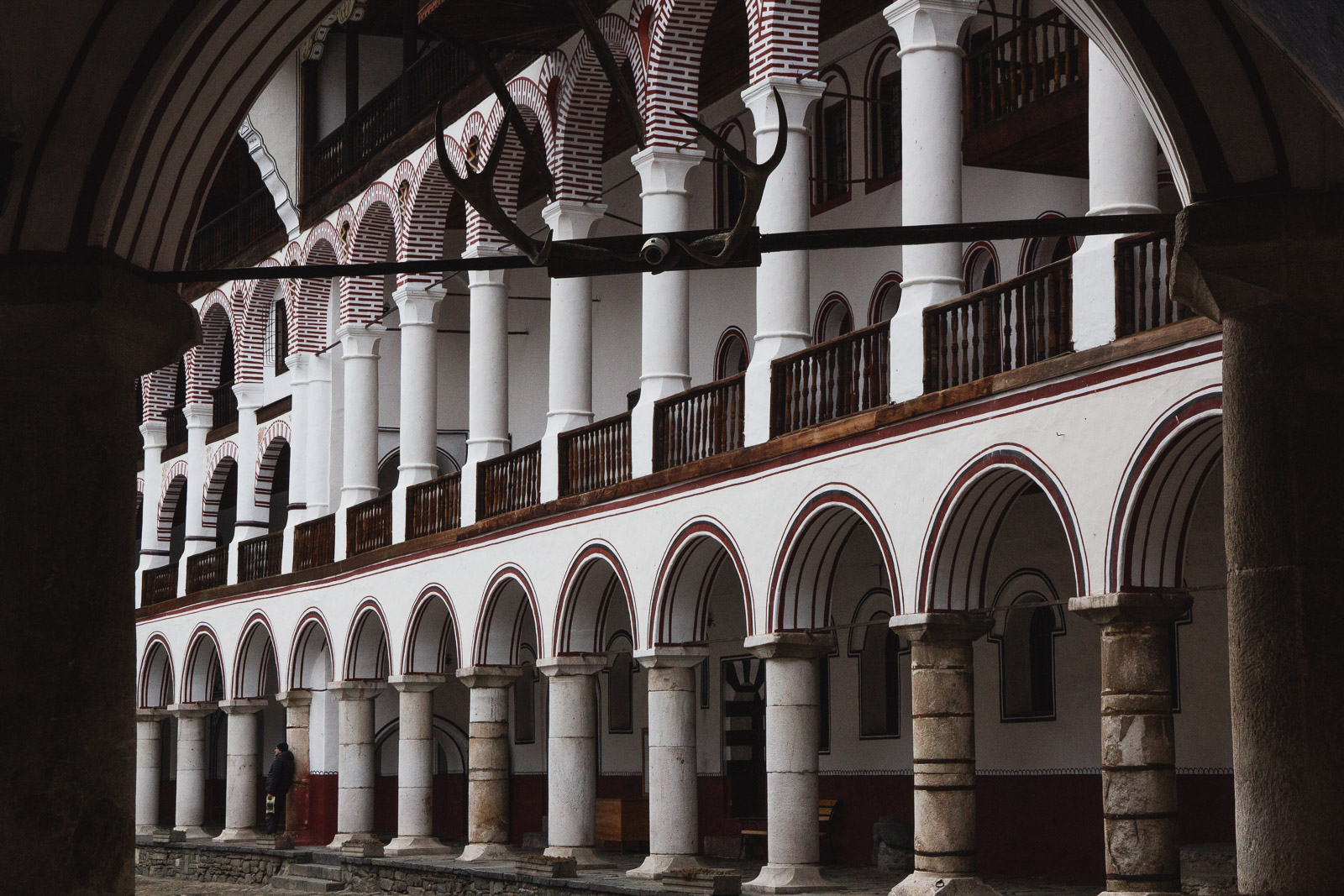
Architecturally, the monastery is a clear example of the Bulgarian National Revival period (18th-19th centuries). This is where its visual identity comes from today, but also its symbolic weight, tied to the re-emergence of a distinct cultural consciousness after centuries of foreign rule.
Rila Monastery is now part of the UNESCO World Heritage list (Dossier 216) and is included in the country’s “100 Tourist Sites” (No. 28). Both designations matter locally, but what they really signal is how consistently this place shows up in the country’s sense of itself.
What can you see inside the Rila Monastery?
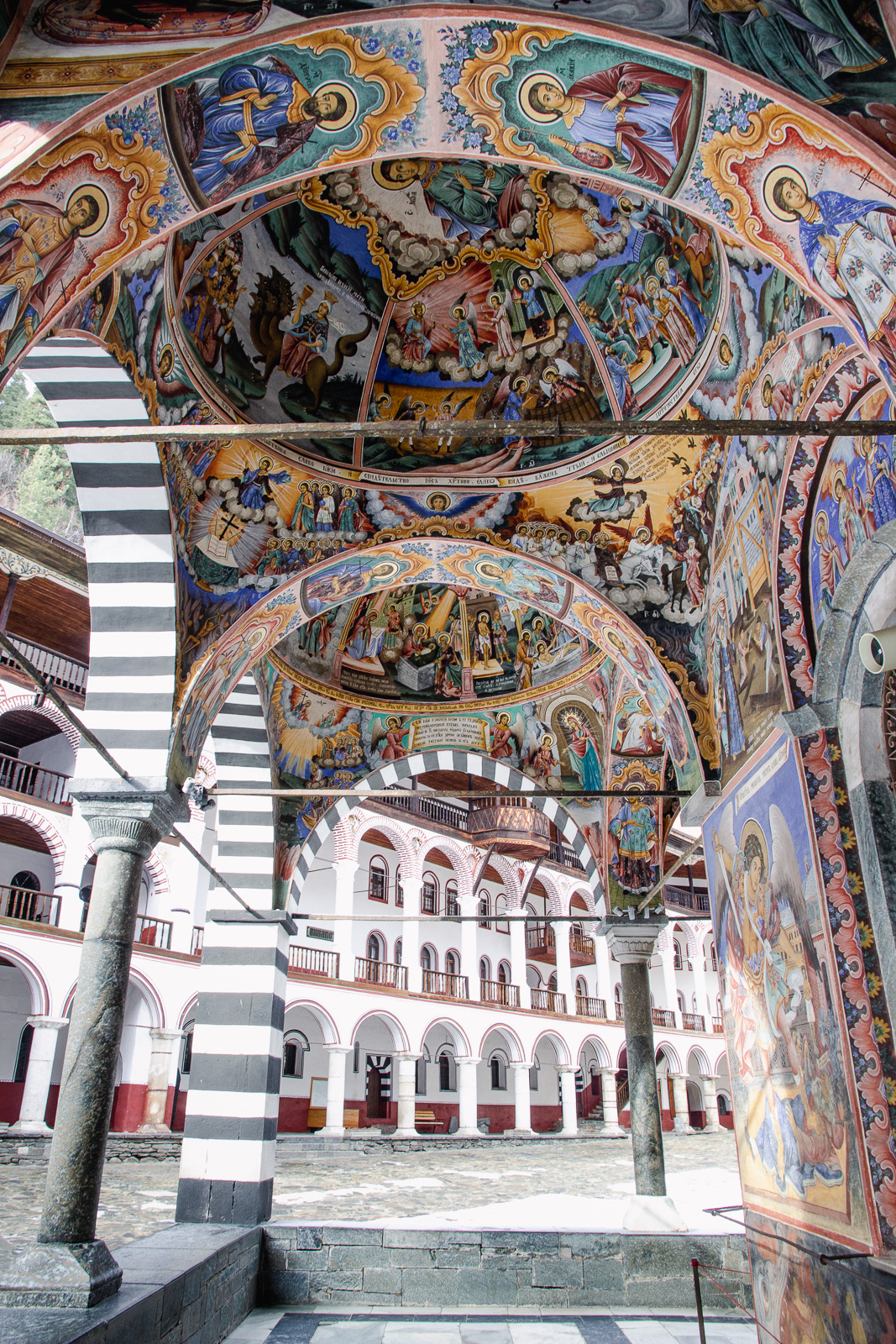
Inside the Rila Monastery, you’ll encounter dense fresco cycles, active religious objects like relics and icons, highly detailed craftsmanship, and a series of museums that explain how the monastery functioned beyond its spiritual role.
Rila Monastery frescoes
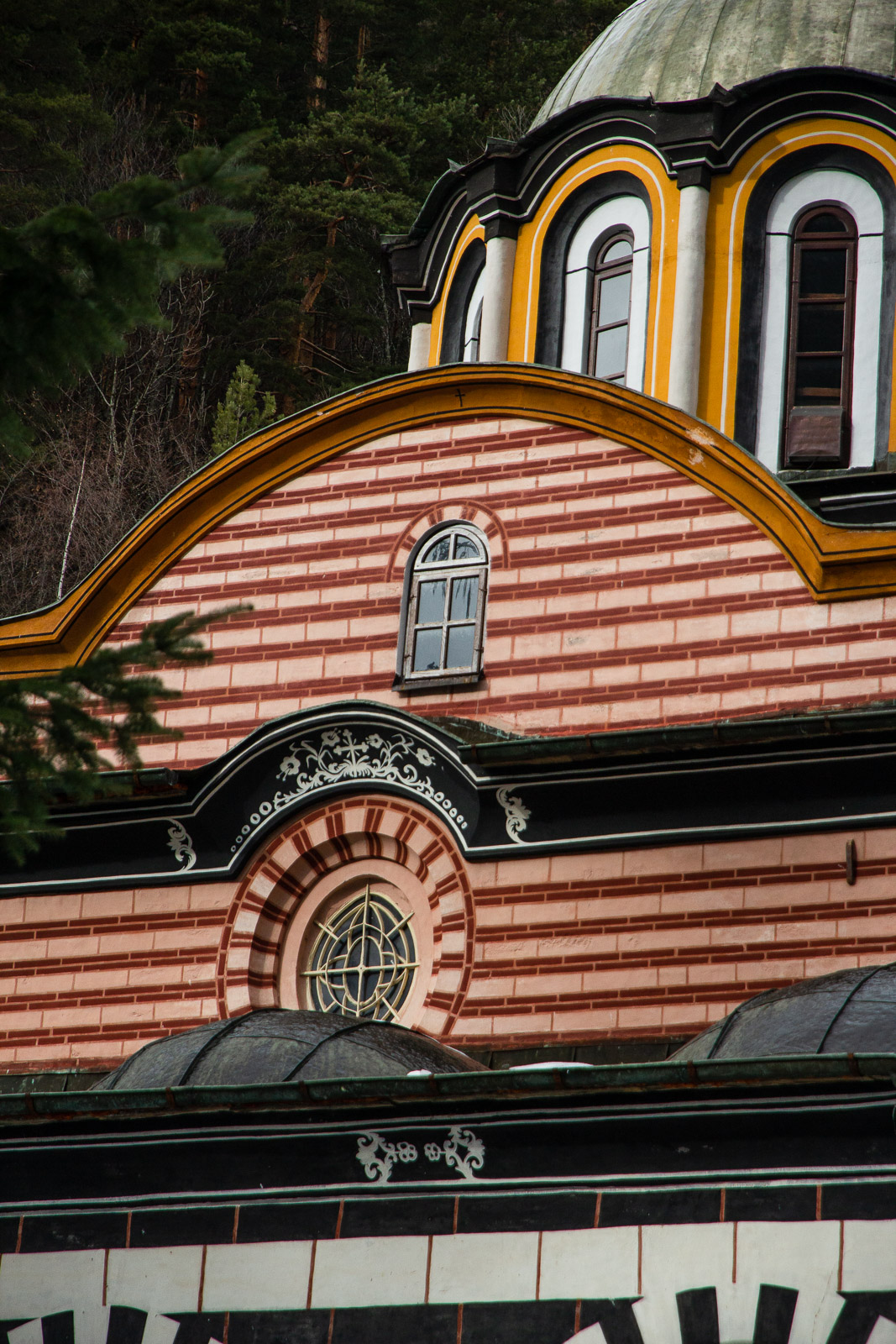
The first thing that tends to hold your attention is the painted exterior of the main church.
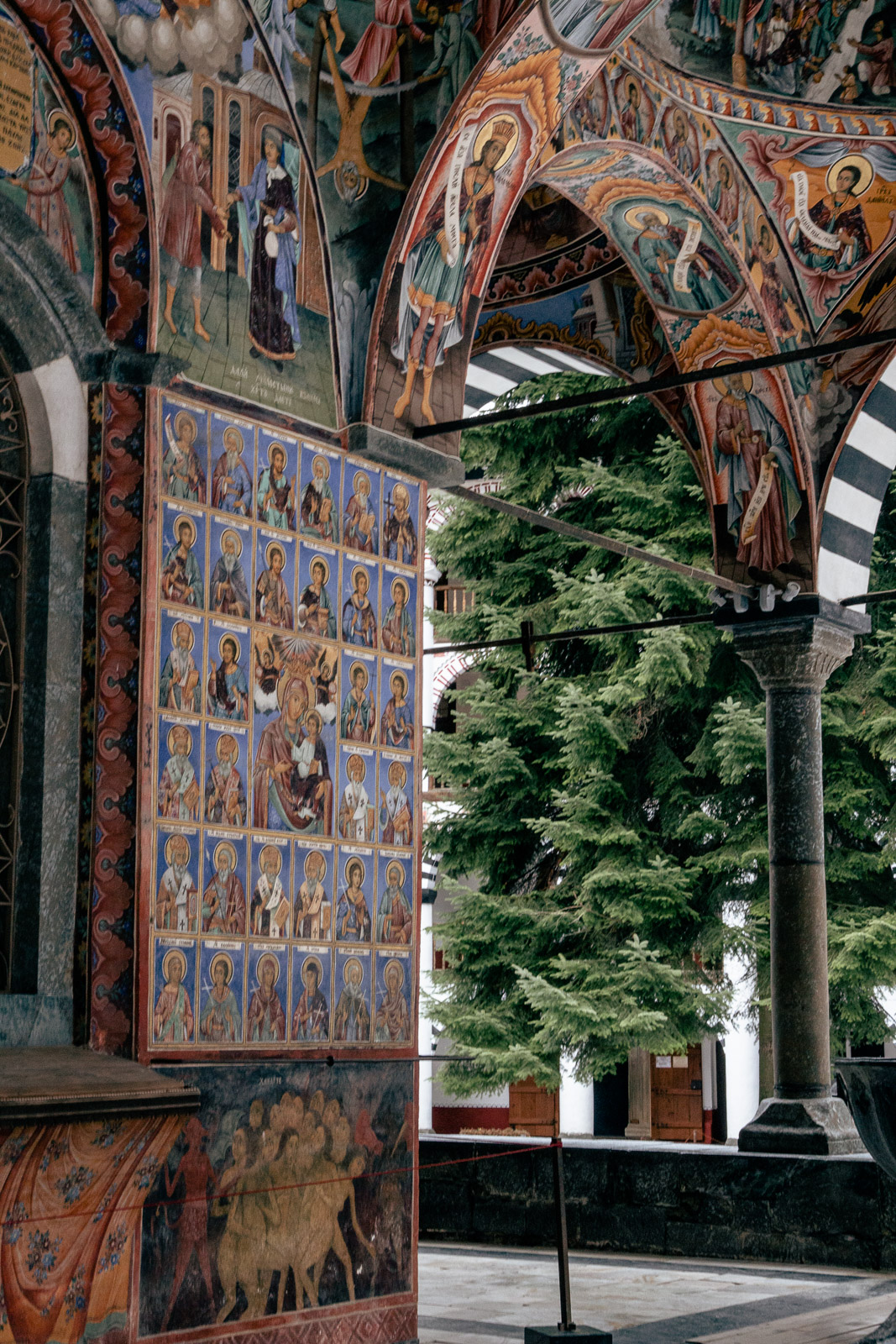
The domed porch surrounding it is completely covered in frescoes – there’s no empty space to rest your eyes. Every surface is filled with biblical scenes, rendered in strong, saturated colors that still feel surprisingly direct despite their age.
These frescoes were completed in 1846 and are the work of Zahari Zograf, one of the most recognized Bulgarian muralists, alongside his brother Dimitar Zograf, an icon painter. They were not working in isolation – artists from the Bansko, Samokov, and Razlog schools also contributed, which helps explain the density and variation in style across the surfaces.
The relics of St. Ivan of Rila and the miracle-working icon
Inside the main church are kept the relics of St. Ivan of Rila – the monastery’s founder and widely regarded as a spiritual protector of the Bulgarian people. You’ll find them near the iconostasis, beneath a dark red cloth embroidered with gold.
In the same space, the monastery’s most valued icon is also preserved – the miracle-working icon of the Holy Mother of God Odigitria (often translated as “The Guide”). According to one account, it was donated by Mara, the sister of Tsar Ivan Shishman and wife of Sultan Murad I.
Even if you’re not approaching this from a religious perspective, it’s clear that these are not treated as display pieces. They’re still part of an active belief system, which shapes how the space feels and how people move through it.
The wood-carved cross by Monk Rafael
Among the objects that tend to stop people in place is an incredibly detailed small wooden cross carved in the course of 12 years.
It was carved by the monk Rafael, using fine chisels, a needle, and magnifying lenses. Over the course of 12 years, working on a single piece of wood measuring just 81 by 43 cm, he created 104 religious scenes, 36 moments from the life of Jesus Christ, and more than 650 miniature figures.
The level of detail is difficult to process in one pass – you end up leaning in, then stepping back, then leaning in again.
The cost of that work is part of how it’s remembered. He lost his eyesight during its creation.
The Rila Monastery Museum complex
Beyond the main church, the monastery includes a series of museum spaces that shift the experience from symbolic to historical.
- The Church-History Museum is the core of this, tracing the monastery’s development from its founding by St. Ivan of Rila through to the end of the 19th century. The collection includes fresco fragments, icons, manuscripts, vestments, and other objects tied directly to monastic life.
- The Icon Gallery includes around 80 selected works from the 18th-19th centuries, alongside eight portraits of abbots who led the monastery between 1860 and 2005.
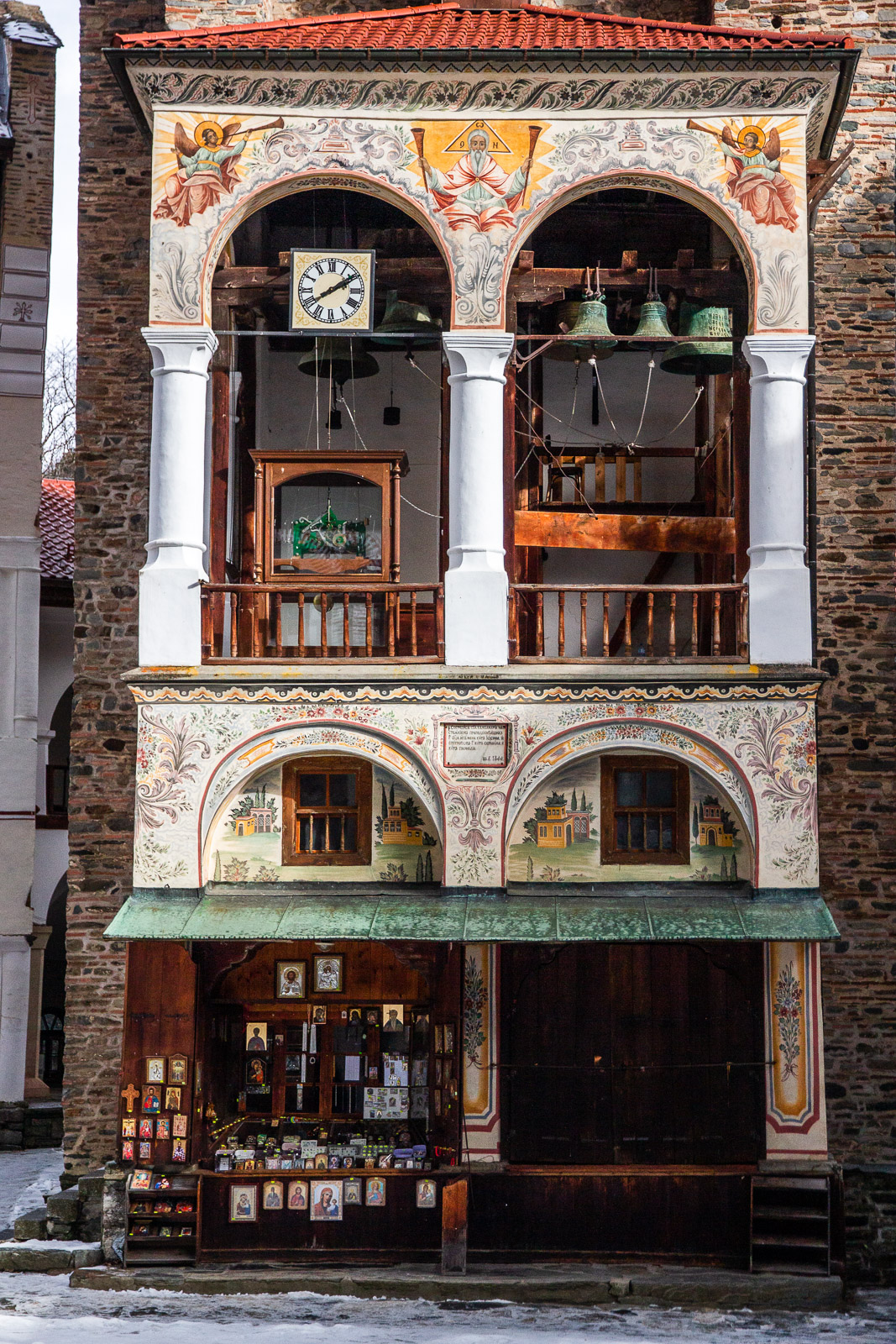
- Hrelyo’s Tower stands slightly apart in both function and atmosphere. It’s a five-story stone structure, 23.6 meters high, and the oldest preserved building in the complex. The top floor contains a chapel with frescoes, which adds another layer to what initially looks like a defensive structure.
- The “Monastery Economy” Museum focuses on something less visible but equally necessary – the economic activities that supported the monastery during the 18th and 19th centuries. This includes things like wood processing and beekeeping, giving a clearer sense of how self-sufficient the complex needed to be.
- The Ethnographic Museum brings in objects that were donated to the monastery, many from the 18th and 19th centuries. These include carpets, traditional clothing, jewelry, and a reconstructed 19th-century domestic interior.
- The ethnographic guest rooms (known as archondaritsi) show how different Bulgarian towns maintained their own spaces within the monastery during the National Revival period. Places like Koprivshtitsa, Teteven, Chirpan, Kyustendil, and Gabrovo each furnished and maintained rooms for their residents, reflecting their local identity even while staying here.
Taken together, these spaces make it clear that the monastery was never just a religious site. It functioned as a network – spiritual, economic, and cultural – all at once.
Is Rila Monastery a UNESCO site?
Yes – Rila Monastery has been part of the UNESCO World Heritage list in Bulgaria since 1983, under the cultural category.
Category: Culture
Date of inscription: 1983
Dossier: 216
The designation is based on several overlapping factors:
- Over 1,000 years of continuous religious life
- A major center of Eastern Orthodox spirituality
- Preservation of Christian culture during Ottoman rule
- A key symbol of the Bulgarian National Revival
- Distinctive Balkan architecture and craftsmanship
- Well-preserved frescoes and wood carvings
- Authenticity, with the monastery still in use at its original location
- Protection within the Rila Monastery Nature Park
Taken together, these are what elevate the monastery from a national landmark to something with broader cultural significance.
What’s the history behind Rila Monastery?
Rila Monastery was founded in the first half of the 10th century, in direct connection with St. Ivan (John) of Rila (876-946), a hermit who settled in the area to live in isolation, devoted to fasting and prayer.
According to both tradition and historical interpretation, he arrived here in the 930s seeking distance from worldly life. He spent his final years in a cave near the site of the present-day monastery, where he lived for about five years.
A few months after his death, his relics were collected and moved to Tarnovo – then the capital of Bulgaria – by order of Tsar Ivan Asen I in 1195, to the Trapezitsa hill near the Tsarevets Fortress.
Over time, the relics were moved multiple times before eventually being returned to Rila Monastery, where they remain today.
Shortly after his death, his followers built a monastery near the place where he had lived. The complex was completed between 927 and 941, initially as a small and modest religious community.
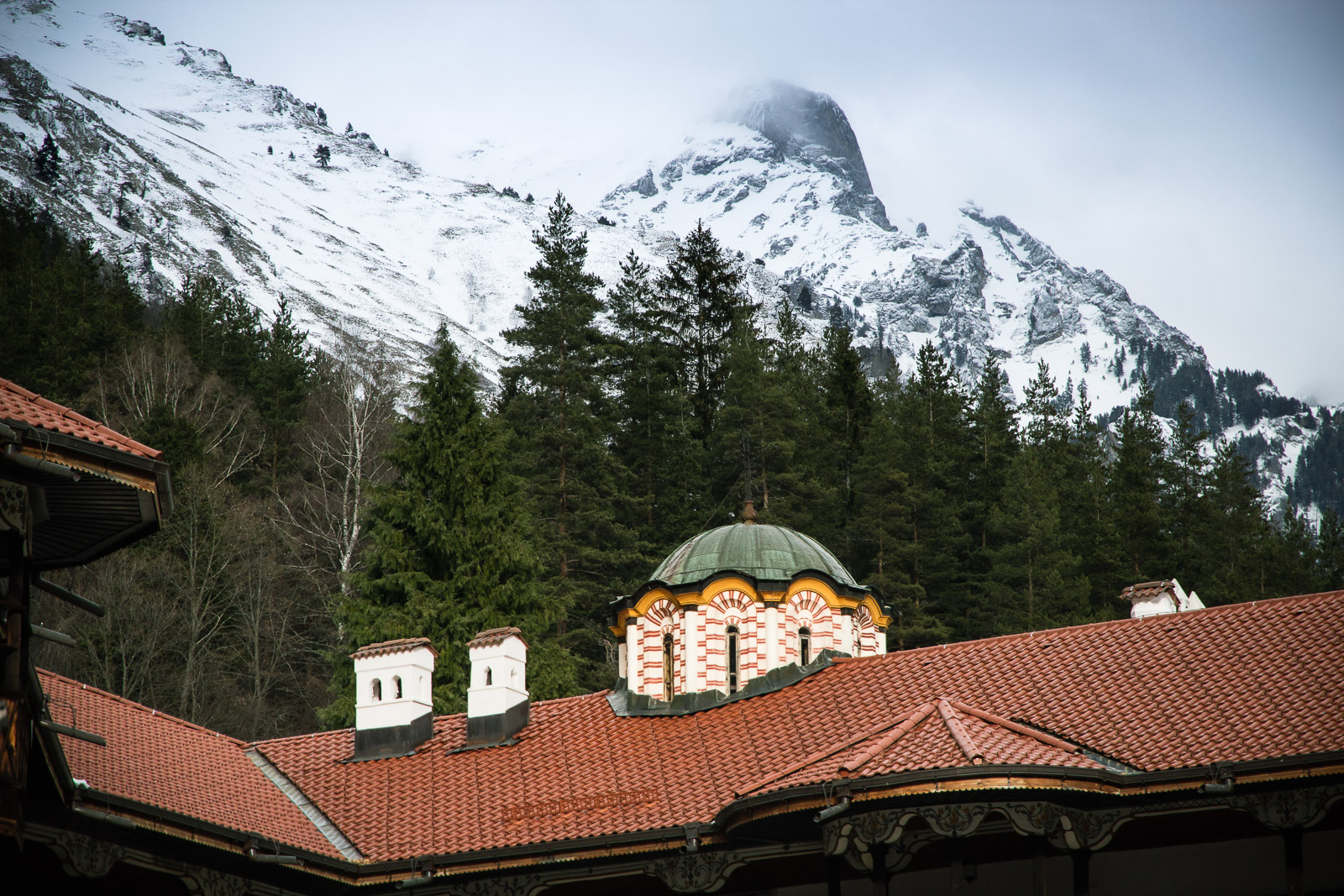
Its appearance changed significantly in the 14th century, when the local feudal lord protosevast Hrelyo Dragovol rebuilt and fortified it, turning it into a more defensive complex suited to increasingly unstable times. Hrelio’s Tower dates from this period.
This development was interrupted at the end of the 14th century, when Bulgaria fell under Ottoman rule. The monastery entered a long period of decline, marked by attacks, and by the mid-15th century it was destroyed and looted.
Recovery began toward the end of the 15th century, supported by donations from Bulgarians across the country. Gradually, the monastery re-established itself as a cultural and spiritual center.
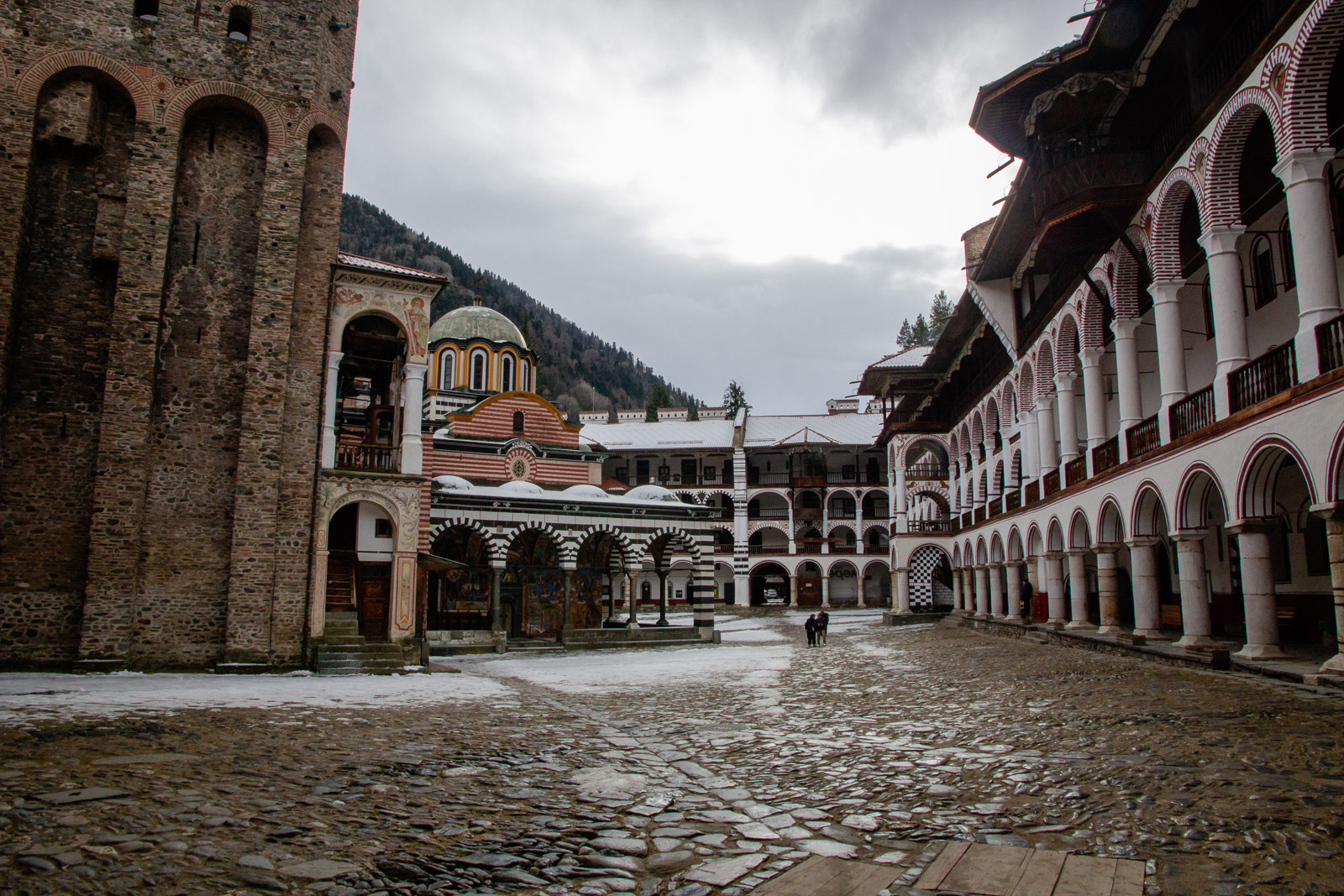
In 1833, a large fire destroyed the complex almost entirely. The monastery was rebuilt between 1834 and 1860, forming much of what you see today. At its peak, it included 185 rooms and 126 kitchens, with the capacity to host up to 2,000 visitors.
In 1961, the monastery was turned into a national museum under the communist government, and religious activity was suspended while the monks were relocated. Seven years later, they were allowed to return, and in 1991 the monastery’s religious status was officially restored.
It continues to function as a working monastery today.
Is there a dress code inside the Rila Monastery?
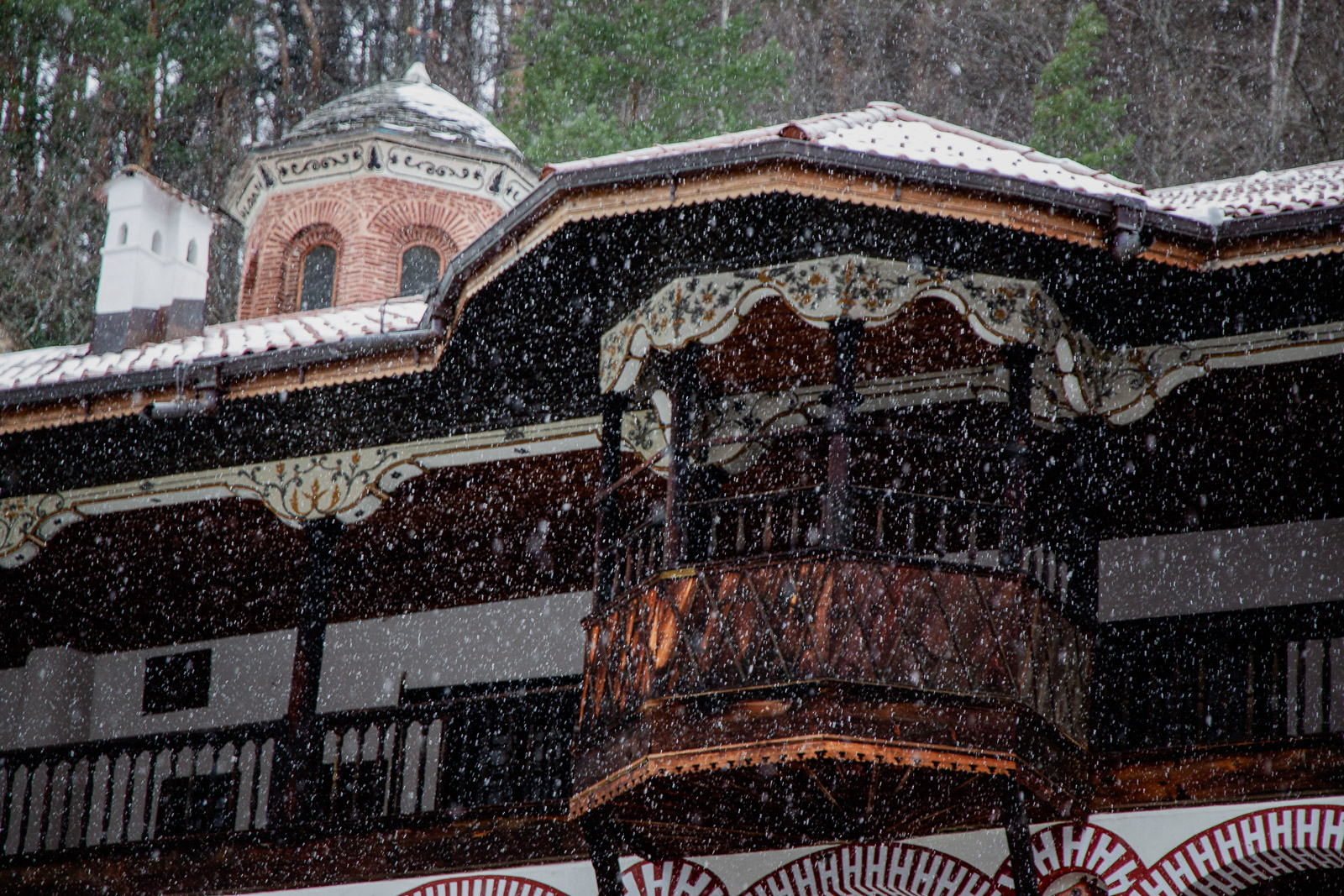
Rila Monastery is an active religious site, and the dress code is enforced, especially inside the main church.
You’re expected to have your shoulders and legs covered. This generally means long trousers or skirts, sleeves, and a higher neckline. Short skirts, shorts, tank tops, and similar clothing are not allowed.
Before entering the church, men are required to remove their hats, while women can keep theirs on.
Large or bulky luggage isn’t permitted inside. If you’re traveling with hiking backpacks or similar gear, you’ll need to leave them outside rather than bring them into the church.
Rila Monastery hours, opening times, and contacts
The Rila Monastery opening hours depend on the season, but the site is generally accessible every day, without a weekly closing day.
Museum opening hours:
- October 1 – May 31: 08:30 – 16:30
- June 1 – September 30: 08:30 – 19:30
If you’re organizing your visit in advance, checking the Rila Monastery hours becomes more important in the colder months, when closing time is significantly earlier.
Contacts:
- Official website: https://rilskimanastir.org/en/
- Accommodation reservations (overnight stays): +359 896 872 010
- Working hours: Monday-Friday, 14:30-16:00 and 18:00-19:00
- Email: [email protected]
- Guided tours: +359 896 872 016
For most visitors, timing comes down to one practical point: arrive early enough to avoid rushing the interiors, especially if you’re not joining an organized tour.
Tickets, prices and entrance fee
Tickets for Rila Monastery are sold only on-site. If you want access to everything, there is a combined ticket available for around €12, which covers all museum expositions within the complex.
| Museum / Exposition | Adults | Reduced* | Children 0-7 | Family Ticket |
|---|---|---|---|---|
| Church History Museum | €4.50 | €1.00-€1.50 | Free | €2.50/€1.00 |
| Icon Gallery | €2.00 | €1.00-€1.50 | Free | – |
| Hrelyo’s Tower | €2.50 | €1.00-€1.50 | Free | €1.50/€1.00 |
| Monastery Economy Museum | €2.50 | €1.00-€1.50 | Free | €1.50/€1.00 |
| Ethnographic Museum & Guest Rooms | €3.50 | €1.00-€1.50 | Free | €2.50/€1.00 |
*Prices are per museum.
*Reduced applies to students (up to 18), pensioners, and brotherhoods depending on the exhibition.
- Children 0-7 years old enter free everywhere.
- If you enter all museums separately as a single adult, the total cost is €15.00
- There is a discounted combined ticket that you can buy for €12.00
Rila Monastery map and address
The monastery is set deep in the Rila Mountains, between the Rilska and Drushlyavitsa rivers, at an altitude of 1,147 meters. It is officially classified as a separate settlement within Rila Municipality, in Kyustendil Province, with a small permanent population of around 58 people.
Rila Monastery address: Rilski Manastir, Kyustendil Province, 2643, Bulgaria
Rila Monastery altitude: 1,147 m
The elevation matters more than it might seem on paper. You’re going up into the mountains, which means temperatures can shift quickly, so it’s worth checking the forecast and adjusting what you wear before you head out.
Below is a map and legend of the monastery complex to help you navigate the site more easily.
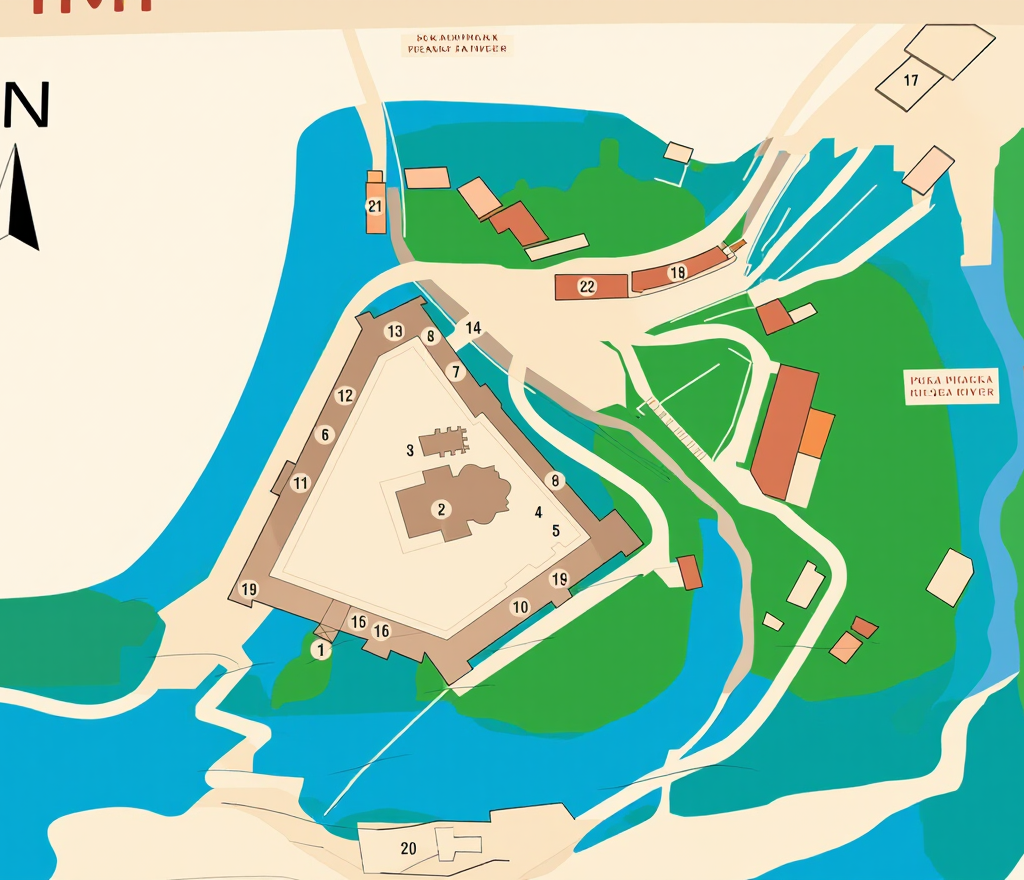
Legend:
1 – Dupnitsa gate
2 – Main monastery church “The Nativity of the Holy Mother”
3 – Hrelio’s tower
4 – Ecclesiastical and historical museum
5 – Registration of the guests
6 – Old monastery kitchen (Magernitsa)
7 – Police station and fire station
8 – Museum of the monastery economy
9 – Rila Monastery clerks’ offices
10 – Icon gallery
11 – Ethnographic museum 3rd floor
12 – Library 2nd floor
13 – Renaissance guest rooms (museum) 3rd floor
14 – Samokov gate
15 – Post office
16 – Medical aid
17 – Hotel restaurant “Tsarev Vrah”
18 – Rila Inn
19 – Toilets (WC)
20 – Monastery ossuary
21 – Restaurant “Drushliavitsa”
22 – Bakery
How to get to Rila Monastery?
There are several transportation options:
- Car rental / personal car: The most direct way, especially for a Sofia to Rila Monastery trip (120 km). Follow the E79 (Sofia-Kulata), turn at Kocherinovo, then continue about 25 km. Paid parking is available (5 BGN/day).
- Private transfer: A more comfortable door-to-door option, without needing to navigate or park.
- Shared transfer: A cheaper alternative from Sofia – Traventuria offers shared shuttles to the Rila Monastery on a daily basis.
- Organized tour: Common for a day trip from Sofia to Rila Monastery, usually with transport included and a fixed schedule.
- Bus (via Blagoevgrad): Travel first to Blagoevgrad, then take a bus from Blagoevgrad (07:00) -> Rila town (07:40) -> Rila Monastery (08:10). There is no Plovdiv to Rila Monastery bus or Bansko to Rila Monastery bus.
Rila Monastery accommodation
A Rila Monastery stay is possible, but you need to book in advance by phone.
There are two options:
- One is similar to a basic hotel room, with a bed, electricity, and a private bathroom.
- The other is much more minimal – wooden bed, no mattress, no hot water, no electricity, and a fireplace – closer to a traditional monastic setup.
The price for a Rila Monastery overnight stay is around 25 BGN per bed.
If that feels too limited, there are several Rila Monastery hotels and guesthouses in the surrounding area, which offer a more standard stay while keeping you close to the complex.
What to see nearby?
There are a few places around the monastery worth seeing, but most require a bit of walking or a short drive.
Close to the monastery
- The grave of James Bourchier: Located a short distance from the monastery. He was an Irish journalist and Balkan correspondent who supported the Bulgarian cause. He’s also associated with the painting Rachenitsa (1894) by Ivan Mrkvička, where he is believed to be the central figure.
- The cave of St. Ivan of Rila: The place where the saint spent the final years of his life in isolation, fasting and prayer. Nearby is a small stone church marking his former burial site.
- The inscribed rock: A rock with a carved cross and the inscription “Welcome, monastery guests.” It sits along an old path that once connected the northern parts of Rila Mountain to the monastery, used by pilgrims.
Ecological and botanical routes:
→ Kirilova polyana → Suhoto ezero – 2h (🟢, green trail)
→ Kirilova polyana → Ribni ezera → Smradlivo ezero – 5h (🟡, yellow trail)
→ Dendrological trail – 2,5h (🟠, orange trail)
→ Brichebor – 3km
→ Studenata cheshma (near the cave of St. Ivan of Rila)
→ On the trail of the Rila primrose and rhubarb – 5h (🟡, yellow trail)
→ Trail of young naturalists – 1h (🟡, yellow trail)
→ Trail “At the forest home” – 1h (🟠, orange trail)
→ Ecological trail “The old train” – 2,5h (🟠, orange trail)
Nearby huts:
→ Hut Ivan Vazov – 6h (🟠, orange trail)
→ Hut Seven Lakes – 6,30h (🟡, yellow trail)
→ Hut Malyovitsa – 7h (🔵, blue trail)
→ Hut Mechit – 9h (🟢, green trail)
→ Hut Ribni Ezera – 6h (🟡, yellow trail)
→ Hut Macedonia – 7h (🟢, green trail)
There is also a marked pilgrimage route, “The Miracle-Worker of Rila,” which connects Sofia to the monastery.
Further nearby:
- Stob Earth Pyramids
- Kyustendil
- Blagoevgrad
- Sapareva banya
These are all within driving distance and can be combined with a visit, depending on how much time you have.
FAQs
Is the Rila Monastery worth visiting?
Yes, especially if you want context beyond a typical landmark. It combines religious significance, history, architecture, and active use, which gives it more depth than a standard stop.
How much is the ticket for Rila Monastery?
There is no single entrance ticket. You pay per exhibition, or around €12 for a combined ticket covering all museum spaces.
Is the Rila Monastery still active?
Yes. It functions as a working monastery, not just a historical site.
Can you sleep in Rila Monastery?
Yes. A Rila Monastery overnight stay is possible if you book in advance. There are basic monastic-style rooms and more standard rooms.
How to get to Rila Monastery from Sofia?
The most direct way is by car (about 120 km via E79). You can also join a day trip from Sofia to Rila Monastery, book a transfer, or travel by bus via Blagoevgrad and continue from there.
Can you take photos inside the Rila Monastery?
Photography is allowed in the courtyard only. It’s not permitted inside the church, museums, or from the terraces. Please respect the rules.
13 things to do in Kyustendil
Planning a trip to Kyustendil? This guide covers what to see in the city and nearby - from Roman thermae and Ottoman-era baths to mountain hikes, giant sequoias, and Rila Monastery - with practical tips to help you plan independently.
Read More
Osogovo ski resort
Discover Osogovo ski resort - Bulgaria's hidden gem with 7 slopes, zero crowds, and views to more than 4 mountain ranges. Just 30 minutes from Kyustendil, this local secret offers everything from beginner-friendly runs to challenging red slopes, plus affordable prices and that authentic mountain vibe bigger resorts have lost.
Read More
Osogovo Hut
Osogovo Hut isn't a typical Bulgarian mountain hut - it's got private bathrooms, unlimited water, and a restaurant with amazing food. This guide covers rooms, prices, hiking trails to Ruen Peak, and what makes it worth the short drive from Kyustendil.
Read More
Events in August 2026
Discover the best festivals, cultural events, folklore celebrations, food fairs, concerts, and local traditions happening across Bulgaria in August 2026.
Read More
Events in June 2026
Discover the best festivals, cultural events, folklore celebrations, food fairs, concerts, and local traditions happening across Bulgaria in June 2026.
Read More
Sozopol Old Town
A practical guide to Sozopol Old Town for first-time visitors, covering the main sights, churches, archaeological sites, beaches, museums, and local history in a way that is easy to actually understand while walking through the town.
Read More
Sozopol beaches
A grounded guide to the best beaches in and around Sozopol, from the busy town beaches to quieter coves, camping beaches, and wilder stretches along the southern Black Sea coast.
Read More