Last updated on February 24, 2026

13 things to do in Kyustendil, Bulgaria

Kyustendil doesn’t try to impress you. 


There are no polished tourist corridors. No aggressive souvenir stalls. No staged “experiences” waiting at the entrance. What you get instead is this: thermal baths, Roman ruins, Ottoman traces, Revival-era churches, monasteries. All within a small radius. All simply existing, without being packaged.


I’ve been to enough overlooked corners of this country to recognize when somewhere is being quietly undersold. The Kyustendil area is one of those places. 


As you walk through town, you move between historical periods without effort – Roman foundations, Ottoman structures, Bulgarian Revival churches. None of it feels forced. It’s just layered there, visible if you pay attention.


In this guide, I’ll start with what you can do inside the city itself. Then we’ll move outward into the surrounding area.

Disclosure:

  • This trip was organized in collaboration with Kyustendil Municipality. As always, all opinions and recommendations are my own.
  • This post may contain affiliate links. That means if you click through and book or buy something, I might earn a small commission at no extra cost to you. 

These resources will help you plan your trip to Bulgaria:

What to see in Kyustendil City

We’re starting from the inside out:

  • Kyustendil city first
  • Then the wider Kyustendil Municipality
  • Then the Kyustendil province beyond that

I know you might only have time for a short stop in the city and skip the surrounding area. And that’s a completely valid way to do this.


Technically, you can tick off all the main sights in a single day. Early start, late finish, no sitting down. 


But I wouldn’t recommend it, and not just because it’s exhausting. Rushing through a place like this means you’ll absorb nothing


Either choose the places that genuinely interest you and spend proper time there, or give yourself two days. With two days, you can also add at least one trip outside the city.


I’ve included a map below so you can build your own route instead of following mine blindly.


1. Kyustendil Art Gallery – Vladimir Dimitrov (Maystora)

The Vladimir Dimitrov Art Gallery is dedicated to Vladimir Dimitrov Popetrov, better known as Maystora – “the Master.” He is one of the most distinctive figures in Bulgarian art.


You’ll see portraits, landscapes, scenes of rural life. But what stayed with me were his war works.


He painted as a war artist. Those paintings feel different. They carry the emotional weight of the trenches – not romanticised, not softened – just documented.


Maystora was from Kyustendil. The city having a dedicated gallery in his name makes sense. Right outside the entrance, you’ll see a monument to him.


Stef’s local tips:

  • This gallery is part of Bulgaria’s 100 National Tourist Sites. You can get your stamp here.
  • Inside, you can buy magnets, books, and prints.
  • Don’t walk past thinking this is just a small regional gallery. It’s not.

2. Dervish Banya (Dervish Bath)

Dervish Banya is a medieval public bath built in 1566. You’ll spot it on your way to the gallery – it’s hard to miss, sitting on its own little traffic island like it owns the road, and the architecture immediately gives it away.


It no longer functions today, and you can’t enter the interior. But it operated for more than 400 years, all the way until the early 1990s – a working building that outlasted empires.


If you walk around the building, you’ll see mineral water still flowing from a spout built directly into the outer wall. 


It’s one of those structures you don’t need to “do.” You just need to notice it.


3. Kyustendil hot springs – Cifte Banya

Cifte Banya is a working public bathhouse – Turkish in origin, still operating today. 


I didn’t manage to get inside this time, but it’s on my list for the next visit. If you have the time and you’re the type of person who actually does things rather than photographs them from the outside, go in. This is a genuinely local experience, and those are worth something.


On the outside, you’ll see large reservoirs. One holds hot spring water (70+ degrees), with a warning sign that is not decorative. The others hold cold water. 


Make no mistake, these are not the only hot springs in Kyustendil. Actually, the city has between 36 to 40 thermal springs. That’s why the city was called Pautalia in the past – meaning something along the lines of “city of springs” or “gushing spring“, and today we call it “the city of mineral springs”.


Below you’ll see a before and after comparison of the interior.

4. Kyustendil Mosque – Ahmed Bay

The former Ahmed Bey Mosque sits right next to the Roman baths, Pirgova Tower, and the Kyustendil hot springs at Cifte Banya. You won’t have to search for it. It’s part of the same compact historical cluster.


The mosque is no longer active. 


Today, it functions as an exhibition hall of the Kyustendil History Museum and hosts temporary and visiting exhibitions, so what you see inside will depend entirely on timing. In the past, this building also housed the city’s archaeological museum.


Architecturally, there are a few details worth slowing down for.


Inside, there’s a balcony with stairs. The idea was simple: a separate upper space for women, while men prayed below. In one of the walls, you’ll notice a carved niche – this is the mihrab, the direction toward which prayers were oriented.


And here’s a small side quest for you: find the two inscriptions – one inside the mosque and one on the exterior. It makes you look more carefully at the building instead of just walking through it.

Stef’s local tip

When you buy a ticket for Ahmed Bey Mosque, it also gives you access to Pirgova Tower, which is just across the street. The guide at the mosque will accompany you, unlock the tower, and let you explore inside.


The woman who welcomed us was kind and proactive, and she’ll most likely explain this to you. But if you arrive during a busier moment, keep it in mind and ask. It’s included – and it’s worth seeing both together.

5. Kyustendil Roman Baths – Asklepion

You’ll see the Roman Thermae from the entrance of the mosque and again as you walk around toward Pirgova Tower. They’re impossible to miss.


And this is something very typical for Bulgaria.


You’re walking down a normal street. Cars pass on one side. You cross the road. And right there, on the other side, are ancient Roman ruins just sitting in the open. No fences you can’t see over. No mandatory ticket. You simply look down at them from above.


I honestly can’t think of many other countries where archaeological sites exist this casually inside daily traffic.


The Kyustendil Thermal Baths date back to the 2nd century and covered between 3,000 and 3,600 square meters. For scale, that’s roughly two and a half Olympic swimming pools.


Because of their size, they fall into the imperial type of baths. In Bulgaria, they are the second largest after the Roman baths in Odessos (today’s Varna), which are around 7,000 square meters.


To understand what that meant, imagine a 2nd-century spa complex with six main sections:

  • Cold hall
  • Warm hall
  • Hot hall
  • Changing rooms
  • Gymnasium
  • Laundry area


This wasn’t just about bathing. It was a social and physical complex.


Here you can also see the only preserved hypocaust system in Bulgaria. These are arched underground tunnel structures through which hot air circulated to heat the rooms above. It’s a Roman heating system, and seeing it still visible here gives you a very direct sense of how advanced these spaces were.


Again, no dramatic presentation. Just layers of Roman infrastructure in the middle of town.


6. The Tower in Kyustendil – Pirgova (Pirkova) Tower

Pirgova or Pirkova Tower stands in the central part of Kyustendil, right next to the Roman baths and Ahmed Bey Mosque. You’re already in the area, so it makes sense to see it together with the rest.


The name comes from the Greek word pyrgos, meaning “tower.”


It’s a medieval defensive structure built by a local feudal lord, designed both for protection and for living. Which, when you step inside, feels… intense.


The feudal lord lived here with his family. Personally, I find it a slightly oppressive place to call home, but clearly security was a priority.


The tower is spread across several levels, each with a specific function:

  • Storage / basement level
  • Living area
  • Sleeping quarters
  • Defensive top floor


And then there’s the toilet.


It was positioned between the upper floors and emptied directly onto the street below. Unfortunate for anyone passing at the wrong moment. It’s one of those details that quickly makes you appreciate modern plumbing.


Today, the lowest level hosts an exhibition from the Regional Historical Museum. It adds context and, honestly, softens the otherwise grey and heavy atmosphere of the interior.

Stef’s local tip

Visit it together with the mosque. The two buildings tell very different stories, but they’re part of the same layered center.

7. Regional Historical Museum “Acad. Yordan Ivanov”

As you approach the museum, you’ll probably stop and just stare.


The building in front of you is massive. I genuinely hadn’t seen something this large attached to a regional museum before. Even the National History Museum in Sofia doesn’t feel this imposing at first glance.


Then you get closer and realize something – that huge structure is actually a former tobacco warehouse


The archaeological exhibition of the museum is located in a much smaller building to the right of the main path, which might be slightly disorienting at first. Especially when you learn that the ethnography exhibition is inside the tobacco warehouse.

Stef’s local tips:

  • Every last Thursday of the month, the museum exhibitions are free. If your dates are flexible, plan around that.
  • There’s also a combined ticket covering most major sites in the city: the mosque, Pirkova Tower, the Ilyo Voyvoda House-Museum, the Dimitar Peshev House-Museum, the Regional Historical Museum, St. George’s Church, and the Efendzhieva House. You can buy it at any of those locations.
  • The only exception is the Art Gallery, which has separate ticketing.

Archeology and Numismatics sections

The archaeological exhibition is divided into four sectors:

  • Prehistory
  • Antiquity (Thracian-Roman period)
  • Medieval period
  • Numismatics


For me, the standout highlight was the reconstructed chariot. Nearby, you’ll see artifacts that were pierced by arrows, which immediately shifts the display from “ancient objects in a case” to something more human and violent and real.


As you move toward the ethnographic exhibition, you’ll pass through the museum courtyard. There you’ll find the Lapidarium “Pautalia,” an impressive collection of stone sculptures and architectural elements from the 2nd-3rd century.


It’s one more reminder that Kyustendil wasn’t peripheral in Roman times. It was active and built-up.


Ethnography exhibition

The ethnographic exhibition here is probably the most unconventional one I’ve seen in Bulgaria.


I haven’t visited every ethnographic museum in the country (not yet) but this one stands out because it doesn’t just show traditional objects. It explores belief.


The exhibition “In the World of Mythology and Demonology,” curated by Assist. Prof. Dr. Veska Spasova, presents mythological characters from Bulgarian folklore.


You’ll see visual interpretations of:

  • Samodivas
  • Chuma (the plague)
  • Mamnitsi
  • Karakondzhuli
  • Other folkloric figures

Each is accompanied by detailed descriptions of the related beliefs and customs.


It feels less like a static display and more like stepping into the imaginative world that shaped rural thinking for centuries.


Inside, you’ll also see traditional local costumes (nosiya) from the region, which ground the mythology back into daily life.


It’s not the typical “tools and textiles” ethnography layout. It goes somewhere slightly darker and more symbolic – and that’s exactly why it works.

8. House-Museum “Dimitar Peshev”

Here, the story is more powerful than the house itself. At least for me.


But if you’re interested in history and local political figures who actually made a difference, this is an important stop.


Dimitar Peshev was a prominent Bulgarian politician from Kyustendil. Together with other citizens from the town, he played a key role in saving thousands of Bulgarian Jews from Nazi death camps during World War II.


These individuals were later recognized as “Righteous Among the Nations” by the Yad Vashem memorial. That context changes how you walk through the space.


The house-museum is an exact replica of Dimitar Peshev’s home. Inside, you’ll see personal belongings donated by relatives and people connected to those involved. His office from his time in the National Assembly has also been recreated, which gives you a clearer sense of the political environment in which those decisions were made.


On the second floor, similar to Pirgova Tower, there is an exhibition featuring local artists. And this is something you start noticing across the city – Kyustendil consistently gives space to its local creatives.


It’s not just about preserving the past. It’s about continuing cultural presence.


9. Кyustendil church – St. George

St. George’s Church is not just a church. It’s a museum complex.


I’m honestly not sure why it’s less internationally known than Boyana Church in Sofia, because in terms of historical and artistic value, it doesn’t fall behind.


The church was built in the 11th-12th century and is an example of Byzantine architecture of the so-called capital type. Inside, there are five painted layers of frescoes – two more than those in Boyana Church.


The oldest frescoes were created by artists from the Thessaloniki or Ohrid schools.


The most valuable paintings date to the 12th century and depict full-length saints: 

  • Warriors
  • Healers
  • Clergy
  • Female saints. 


They aren’t decorative. They feel intentional and structured, part of a serious artistic program.


Inside the church, you’ll also notice medieval graffiti – drawings and inscriptions left by visitors centuries ago. They’re not considered vandalism. They’re understood as acts of devotion, attempts at connection with the spiritual.


That detail shifts how you see the walls. They weren’t just observed. They were interacted with.

Stef’s local tip

If you’re interested in religious tourism, you can combine Boyana Church in Sofia, the Zemen Monastery “St. John the Theologian,” and St. George’s Church in Kyustendil in a single day – if you’ve rented a car and plan your timing carefully.

What to see beyond Kyustendil

If you’ve planned at least one overnight stay in Kyustendil, don’t stop at the city limits.


This region is compact but layered, and some of the most meaningful spots sit just outside town. Nature and history blend into each other here in a way that feels very natural, not curated.


Start with the hill you’ve probably already noticed.


10. Kyustendil Fortress – Hisarlaka

The Late Antique and medieval fortress Hisarlaka is located about 2 km above Kyustendil. If you look up while walking in town, you’ll likely spot it. Once you go up, the perspective flips – you get a wide panoramic view over the city and the surrounding hills.


It’s one of the few fortresses in Bulgaria where you won’t feel punished by the summer heat. At least from the ones I’ve visited.


That’s thanks to the late forester Yordan Mitrev, who afforested the entire area with conifer trees. The shade makes a real difference. You’ll see his bust monument at the entrance, which feels earned.


Hisarlaka works well as a short daytime walk in any season.


Besides the views, you’ll find:

  • Benches and resting spots
  • A heart-shaped bench for photos
  • A small souvenir shop
  • Places where you can eat and drink

It’s developed enough to be comfortable, but not overdesigned.

Stef’s local tips:

  • In winter, be careful. It can get icy and slippery.
  • Inside the fortress area, there are no detailed explanatory signs beyond the entrance. If you want historical depth, come prepared or with a guide.
  • If you’re visiting in July, look into Hisarlaka Experience – a three-day event with music, activities, art spaces, sports, culture, all set in the forest surroundings.
  • Between 01.05 and 30.09, in good weather, you can take the open tourist bus up to Hisarlaka on weekends and holidays. It’s a relaxed way to get there.

11. The Giant Sequoias near Yuchbunar

If you continue up the same road past Hisarlaka Fortress, you’ll reach Bogoslov village. From there, take a right turn, park, and walk a short distance. That’s how you get to the sequoias.


More than 130 years ago, Yordan Mitrev planted three Sequoia gigantea trees here – the same forester responsible for the forest around Hisarlaka.


Those three trees are now the oldest and tallest sequoias in Bulgaria.


Around them, a small sequoia forest formed naturally. This phenomenon doesn’t exist anywhere else in the country. That alone makes the stop worth it.


You don’t expect to see trees like this in Bulgaria. And then suddenly you’re standing under them.


The surrounding conifer forest is just as impressive. I’m giving it a solid 10 out of 10.


You’ll see:

  • Cedar
  • Cypress
  • White pine
  • Fir
  • Spruce
  • Other conifer species

There’s also abundant wildlife that clearly appreciates the forest as much as I do and has made it home.


It’s quiet. Shaded. And slightly surreal in the best way – not because it’s dramatic, but because it exists at all.


Come for the sequoias. Stay a bit longer for the forest itself.


12. Have fun at Osogovo, Kyustendil

Osogovo is the mountain above Kyustendil. You’re already on the road for it if you’ve driven past Hisarlaka and the sequoias. Just keep going up.


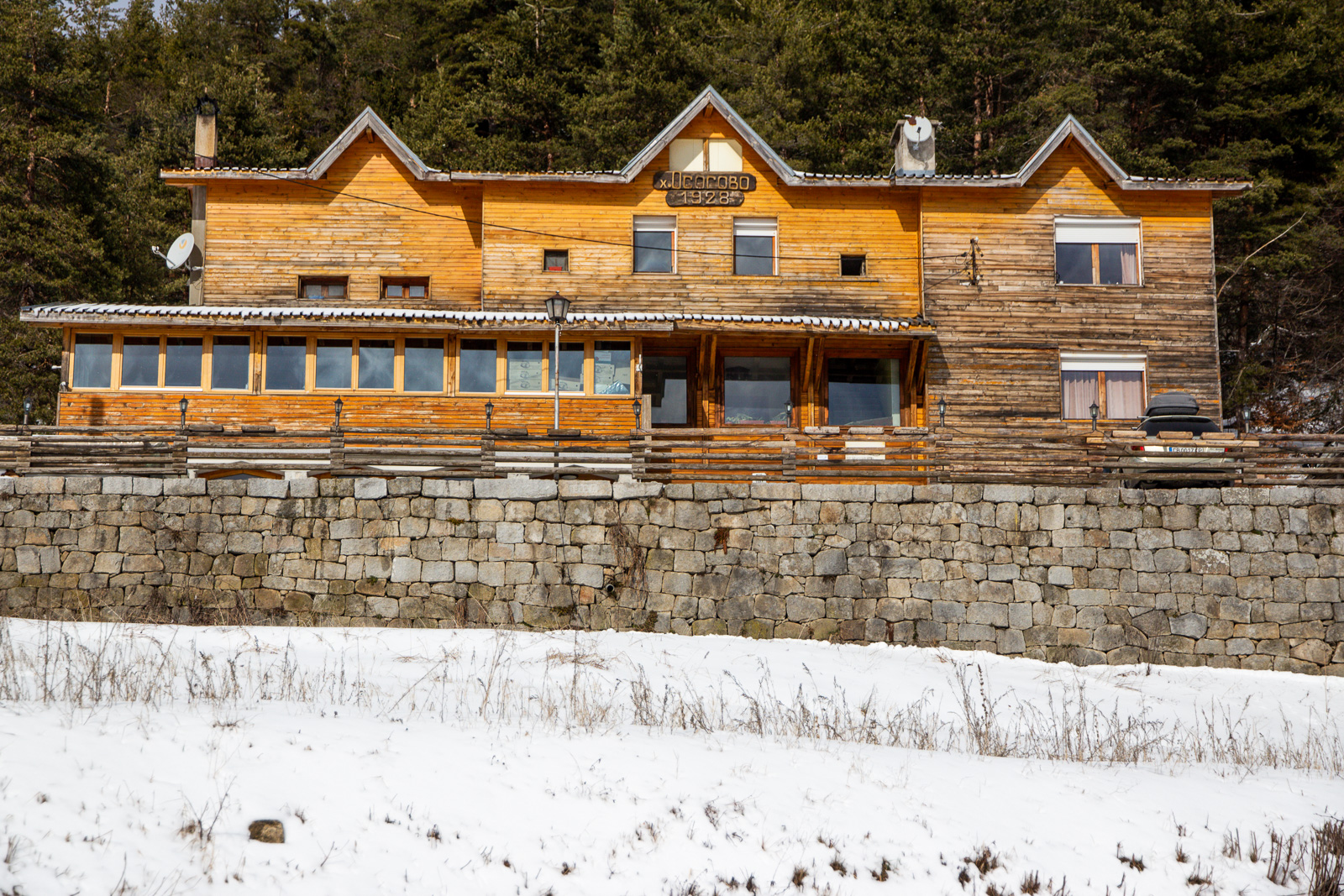
The main starting point here is Osogovo Hut. It’s a cozy mountain hut that feels closer to a small hotel than a basic shelter. Nothing pretentious. Just practical comfort and really good Bulgarian food.


It works year-round, but the experience changes with the season.


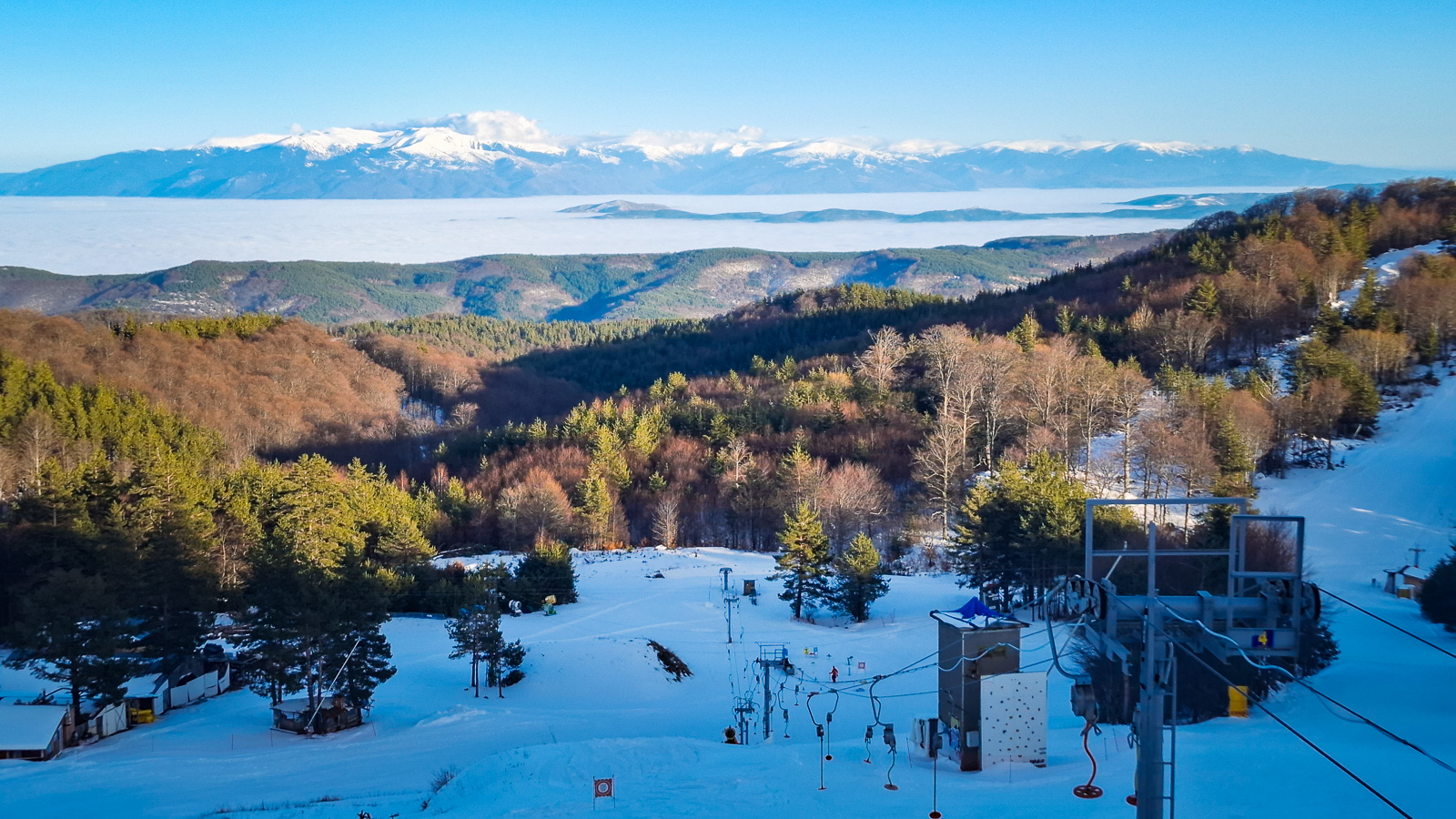
In winter, the Osogovo ski center is just a few meters from the hut. It’s suitable for both beginners and more advanced skiers, which makes it an easy choice if you want something manageable rather than overwhelming.


In summer, the mountain shifts into hiking mode. There are several marked trails, depending on how much time and energy you have.


The most popular route leads to Ruen Peak. It’s one of Bulgaria’s 100 National Tourist Sites and sits right on the border with North Macedonia.


From city streets to Roman ruins to mountain trails within the same day – that’s Kyustendil’s range.


13. Rila Monastery

Rila Monastery, or The Monastery of Saint Ivan of Rila, is not just another stop near Kyustendil. It’s one of the most important places in Bulgaria.


It’s a UNESCO World Heritage Site and part of Bulgaria’s 100 National Tourist Sites. Whether this is your first visit to the country or your fifth, this is a place you should see.


People often call it the treasury of Bulgaria. And for once, that doesn’t feel exaggerated.


The main church is what stays with you – bright, layered frescoes covering the walls in color and detail. It’s visually dense without feeling chaotic. You don’t rush through it.


Inside the complex, you’ll also see the finely carved wooden cross, a piece of craftsmanship that’s difficult to fully process until you stand in front of it. It’s delicate, precise, and clearly the result of extreme patience.


The monastery museums allow you to step into monastic daily life, but also into different regions of Bulgaria. There are ethnographic rooms representing various parts of the country, which gives the visit more cultural depth than just architecture and religion.


Now, something practical – and slightly frustrating.


There is no organized public transport to Rila Monastery from nearby larger regional cities. If you want to visit independently, you’ll need to rent a car.


The other option is to use Traventuria from Sofia. They offer transport-only services as well as a full-day religious tourism tour combining Boyana Church and Rila Monastery, with an optional visit to the Cave of Saint Ivan of Rila.


It’s not the most spontaneous destination logistically. But once you’re there, the effort makes sense.

FAQs

How big is Kyustendil?

Kyustendil is small enough so you can walk between most major sights in the center within 15-20 minutes. The historical cluster – Roman baths, mosque, Pirkova Tower, museum and the rest – is compact and easy to navigate on foot.


How to get from Sofia to Kyustendil?

Kyustendil is about 100 km from Sofia. The most practical way to get there is by car. The drive takes around 1.5-2 hours, depending on traffic. There are also buses from Sofia to Kyustendil. If you’re planning to explore places outside the city like Hisarlaka, the sequoias, Osogovo, or Rila Monastery, renting a car gives you much more flexibility.


Is one day enough for Kyustendil?

Technically, yes. You can see the main city sights in one full day if you start early and move efficiently. But two days is a better pace, especially if you want to include Hisarlaka Fortress or a trip into the surrounding mountains.


What is Kyustendil known for?

Kyustendil is known for its mineral springs, Roman heritage, and layered history. In antiquity, it was called Pautalia, meaning “spring city.” Today, it’s still referred to as the city of mineral springs, with 36-38 thermal sources in the area. It’s also associated with Vladimir Dimitrov (Maystora) and Dimitar Peshev, two very different but equally significant historical figures.


Can you visit Rila Monastery from Kyustendil?

Yes, but you’ll need a car. There is no organized public transport from Kyustendil to Rila Monastery. If you’re already based in the region and have rented a car, it’s a logical and worthwhile addition to your itinerary.

Tell a friend about this

Stefani Gospodinova

Founder and Content Creator

Stefani is a travel blogger born and raised in Bulgaria, and the founder of Kiss My Backpack. Having explored the country since childhood, she shares practical tips, local insights, and her own photography to help visitors plan their trip.

Related posts

Wooden hut Osogovo with snow outside and a forest behind

Osogovo Hut isn't a typical Bulgarian mountain hut - it's got private bathrooms, unlimited water, and a restaurant with amazing food. This guide covers rooms, prices, hiking trails to Ruen Peak, and what makes it worth the short drive from Kyustendil.

Ski resort Osogovo and panoramic mountain view

Discover Osogovo ski resort - Bulgaria's hidden gem with 7 slopes, zero crowds, and views to more than 4 mountain ranges. Just 30 minutes from Kyustendil, this local secret offers everything from beginner-friendly runs to challenging red slopes, plus affordable prices and that authentic mountain vibe bigger resorts have lost.

Latest blog posts

things to do in Bulgaria this March - events and festivals

Planning a trip to Bulgaria in February? From wine and food festivals to Kukeri carnivals and ancient rituals, this month is packed with local traditions and recurring events across the country. Here are 16 events and festivals in Bulgaria this February to help you plan beyond the usual tourist spots.

Wooden hut Osogovo with snow outside and a forest behind

Osogovo Hut isn't a typical Bulgarian mountain hut - it's got private bathrooms, unlimited water, and a restaurant with amazing food. This guide covers rooms, prices, hiking trails to Ruen Peak, and what makes it worth the short drive from Kyustendil.

events in Bulgaria for february 2026

Planning a trip to Bulgaria in February? From wine and food festivals to Kukeri carnivals and ancient rituals, this month is packed with local traditions and recurring events across the country. Here are 16 events and festivals in Bulgaria this February to help you plan beyond the usual tourist spots.

Ski resort Osogovo and panoramic mountain view

Discover Osogovo ski resort - Bulgaria's hidden gem with 7 slopes, zero crowds, and views to more than 4 mountain ranges. Just 30 minutes from Kyustendil, this local secret offers everything from beginner-friendly runs to challenging red slopes, plus affordable prices and that authentic mountain vibe bigger resorts have lost.

Tell a friend about this
0Shares

Leave a Comment

Your email address will not be published. Required fields are marked *

This site uses Akismet to reduce spam. Learn how your comment data is processed.

Scroll to Top