
Last updated on May 25, 2026
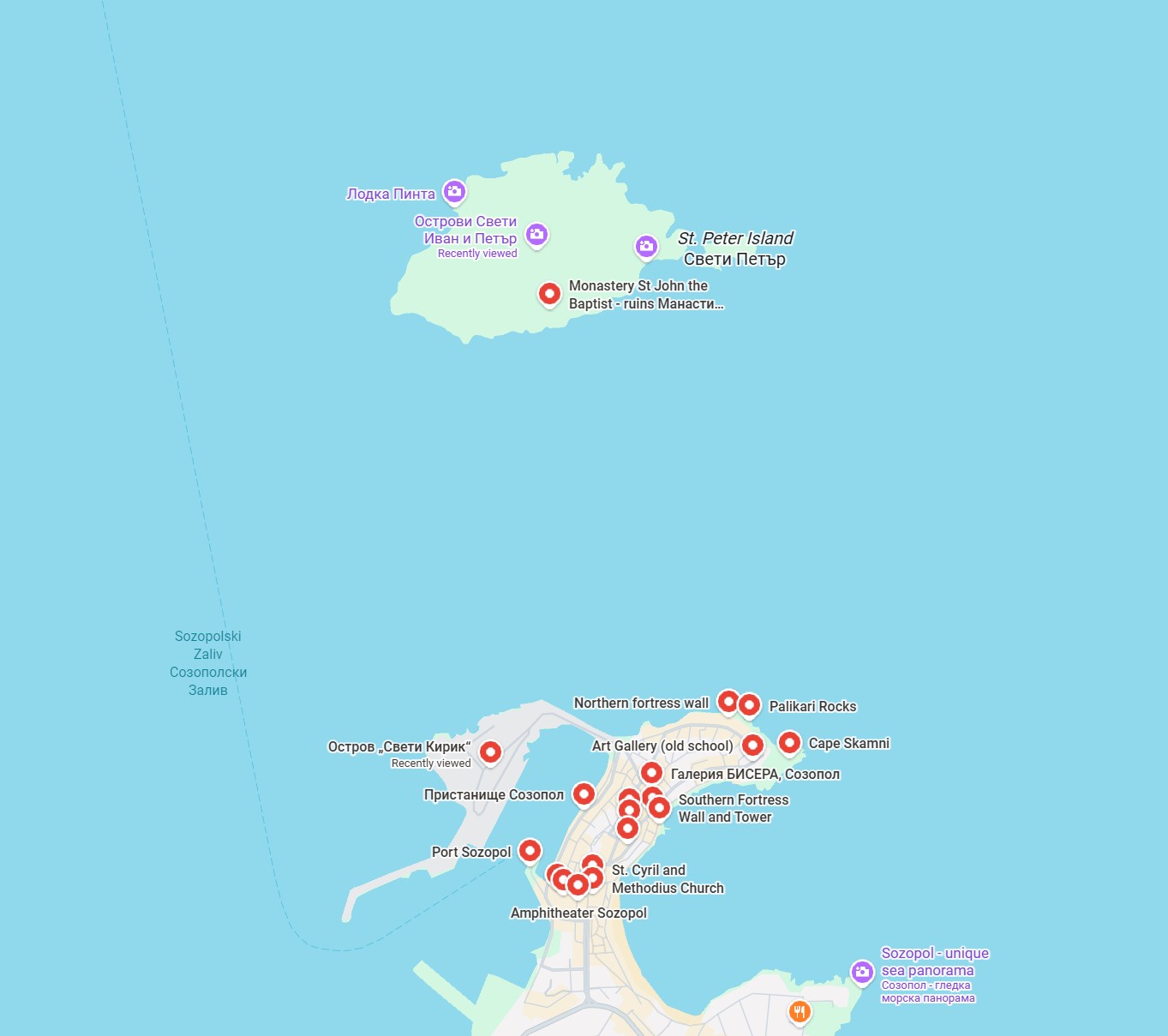
Sozopol Old Town map
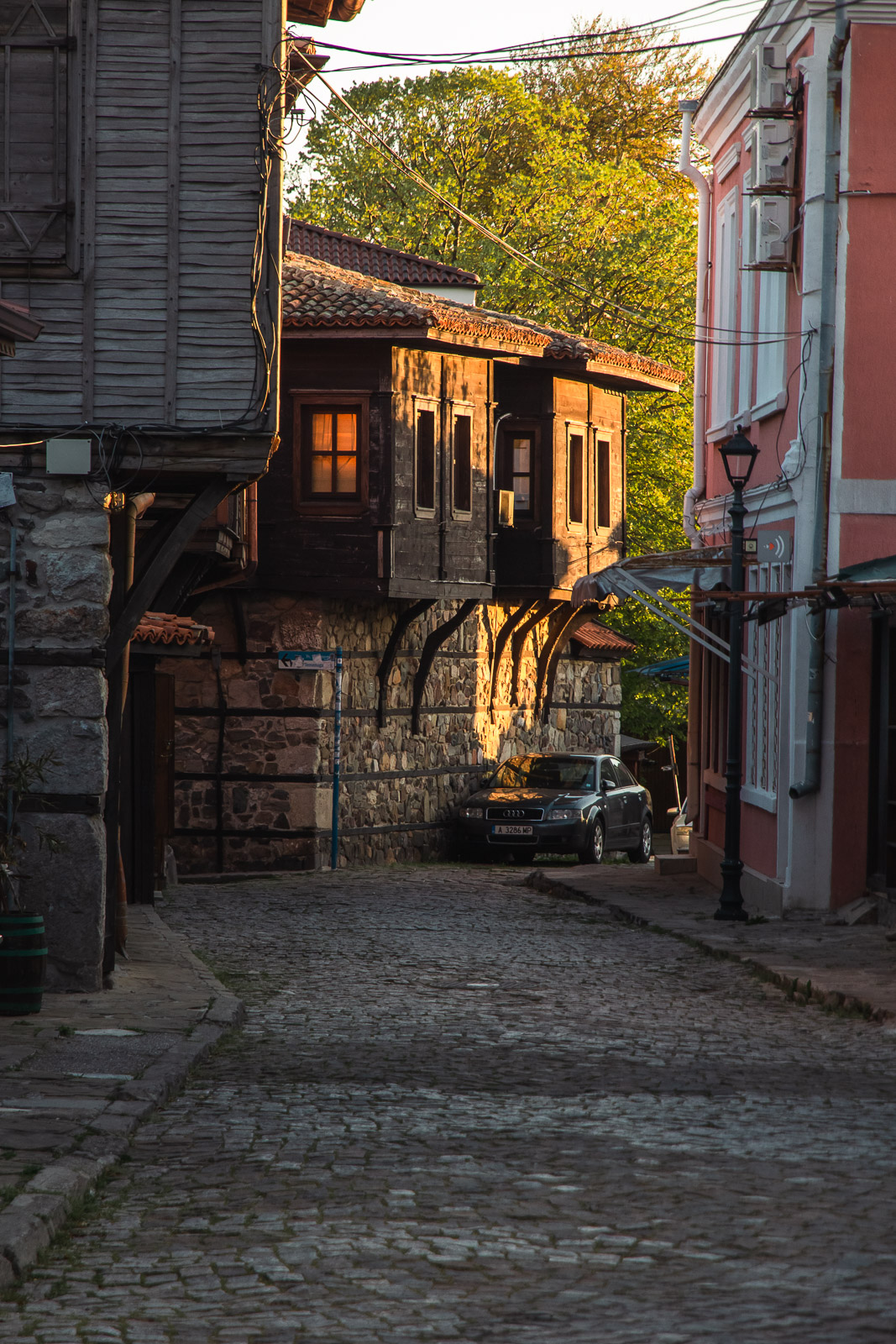
One of the best things about Sozopol Old Town is that you do not really need a plan in order to enjoy it. Walking slowly through the narrow cobbled streets, surrounded by tall Revival-era wooden houses, is already enough to understand why the area has remained so loved for so long.
Still, the old town is not only atmosphere. Some of Sozopol’s most important architectural, historical, and religious landmarks are concentrated here within a very small area. A map helps make sense of what you are looking at instead of simply passing through it.
Below, you’ll find a map with the main sights marked out clearly, followed by explanations and historical context for each one.
1. The traditional houses of Sozopol
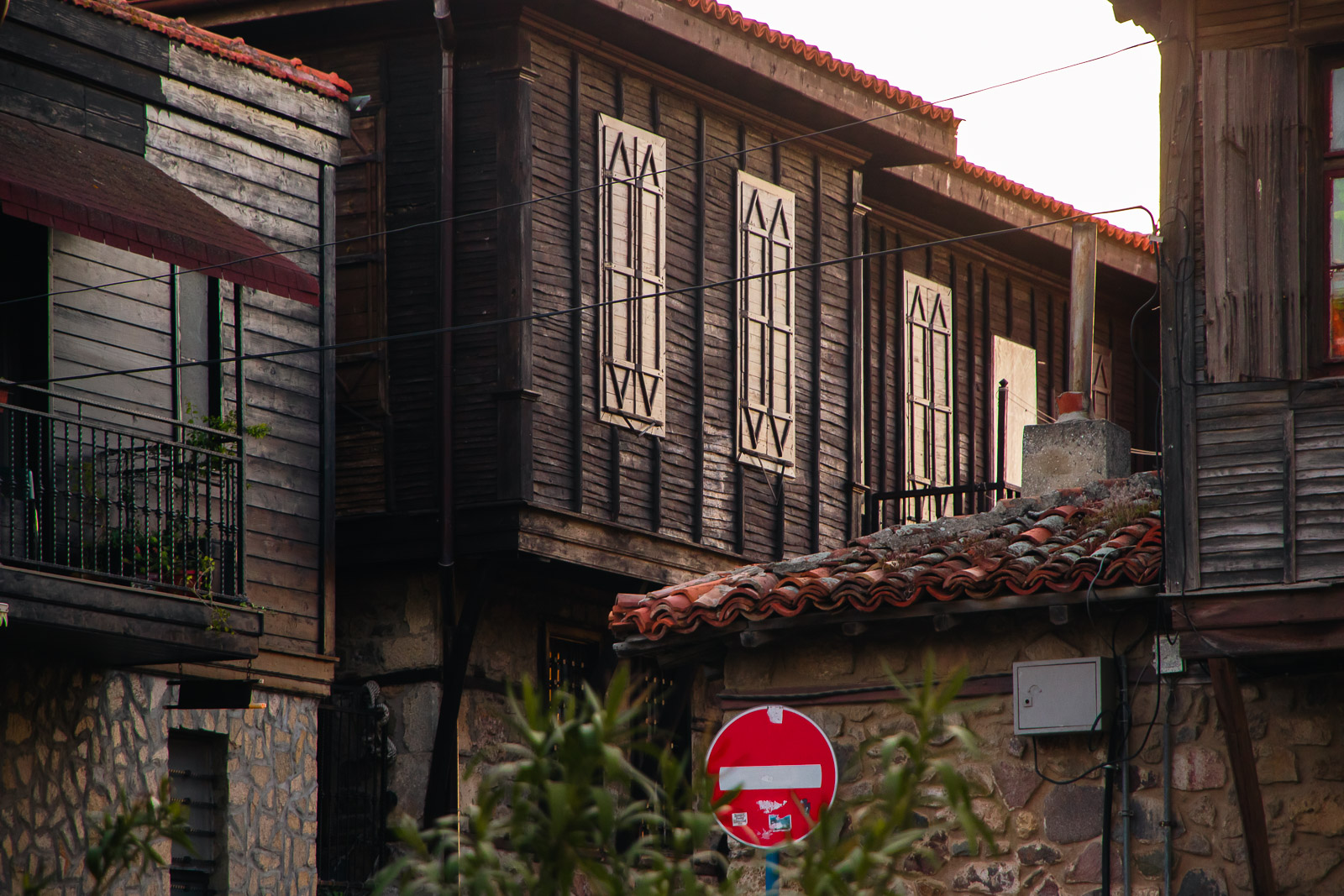
It is worth understanding that Sozopol Old Town itself is part of the attraction. Most visitors walking through the small streets do not fully realize they are moving through what is essentially an open-air architectural museum.
In 1965, the old town was officially declared an architectural and archaeological reserve. More than 80 traditional Revival-era houses have been preserved here, many of them built in the distinctive Black Sea coastal style associated with Sozopol.
The houses are separated by narrow cobbled Sozopol Old Town streets that twist unexpectedly between stone walls, wooden upper floors, and small courtyards. It is very easy to lose your sense of direction here, which is part of the experience rather than a problem to solve.
2. Apollonia summer theatre (Sozopol amphitheatre)
The Apollonia Summer Theatre sits right at the entrance to Sozopol Old Town, so most visitors pass by it without even planning to.
During summer, it becomes one of the town’s main event spaces, hosting:
- Concerts
- Theatre performances
- Folklore festivals
- Film screenings
- Literary evenings and more.

The theatre brings together music, theatre, cinema, and literature events throughout the season. This is also the main venue for the annual Apollonia Arts Festival, one of Bulgaria’s better-known cultural festivals.
3. Saint Nicholas chapel
Saint Nicholas Chapel is the newest church building in Sozopol. Small and easy to miss, it sits attached to the wall of the Archaeological Museum in the old town.
It should not be confused with the older Monastery of Saint Nicholas the Miracle Worker, which is a nearby archaeological site close to the Church of Saints Cyril and Methodius.
The chapel was built in honor of Saint Nicholas, the patron saint of sailors and fishermen – an important figure in a town shaped by the sea. Construction began on Nikulden (Saint Nicholas Day) in 2004 and was funded through donations and volunteer work from local residents.
The beginning of the construction itself became a local event. A ceremonial procession entered the sea with fishing boats and ships carrying hundreds of residents, who threw flowers and wreaths into the water in honor of Saint Nicholas.
6. Archaeological complex “Saint Nicholas the Miracle Worker”
This is one of the most historically dense places in Sozopol Old Town, even if at first glance it mostly looks like ruins layered on top of more ruins.
The site contains the remains of a medieval monastery complex built over much older structures connected to ancient Apollonia. Archaeologists have uncovered traces from more than a thousand years of continuous use here, from early Christianity to the late medieval period.
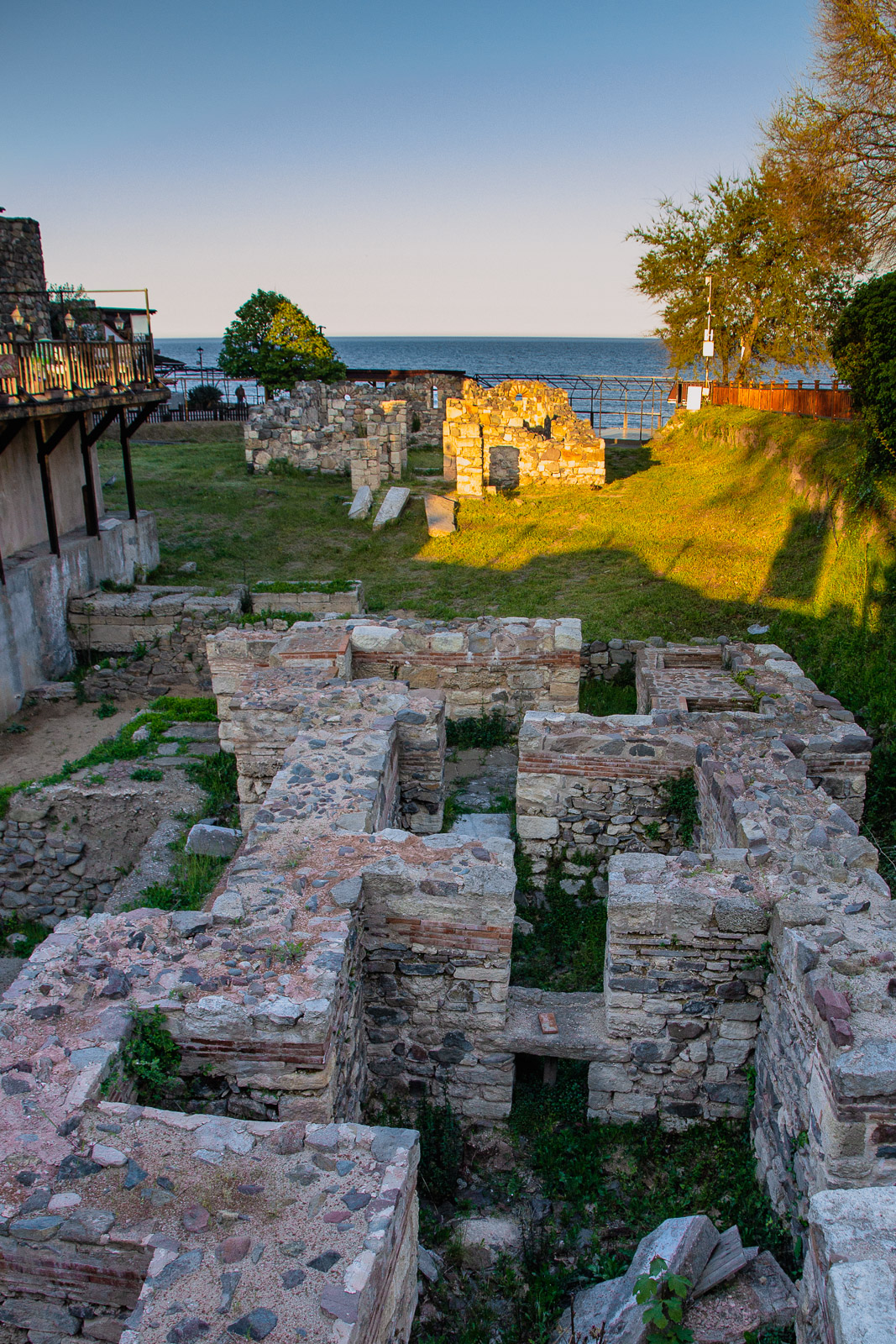
The complex includes:
- An early Christian church later expanded into a larger basilica
- A monastery
- Burial grounds
- Workshops
- A preserved Byzantine bath.
This is also where the remains of the so-called “Sozopol vampire” were discovered – a medieval skeleton buried with iron through the chest as part of an old anti-vampire burial ritual. The skeleton itself is now displayed in the Archaeological Museum.
Among the more important discoveries are several Byzantine imperial seals, including one connected to Emperor Basil II and another to Empress Theodora. Findings like these suggest the monastery had direct ties to Constantinople and operated with imperial support, which tells you how important Sozopol once was within the region.
7. Archaeological site “The Old Municipality”
This site is less visually impressive than some of the larger ruins in Sozopol, but it explains something important about the town: people kept rebuilding here on top of older civilizations for thousands of years.
Under what was once the town municipality building, archaeologists uncovered layers from ancient Apollonia, the medieval city, and more modern Sozopol all in the same place.
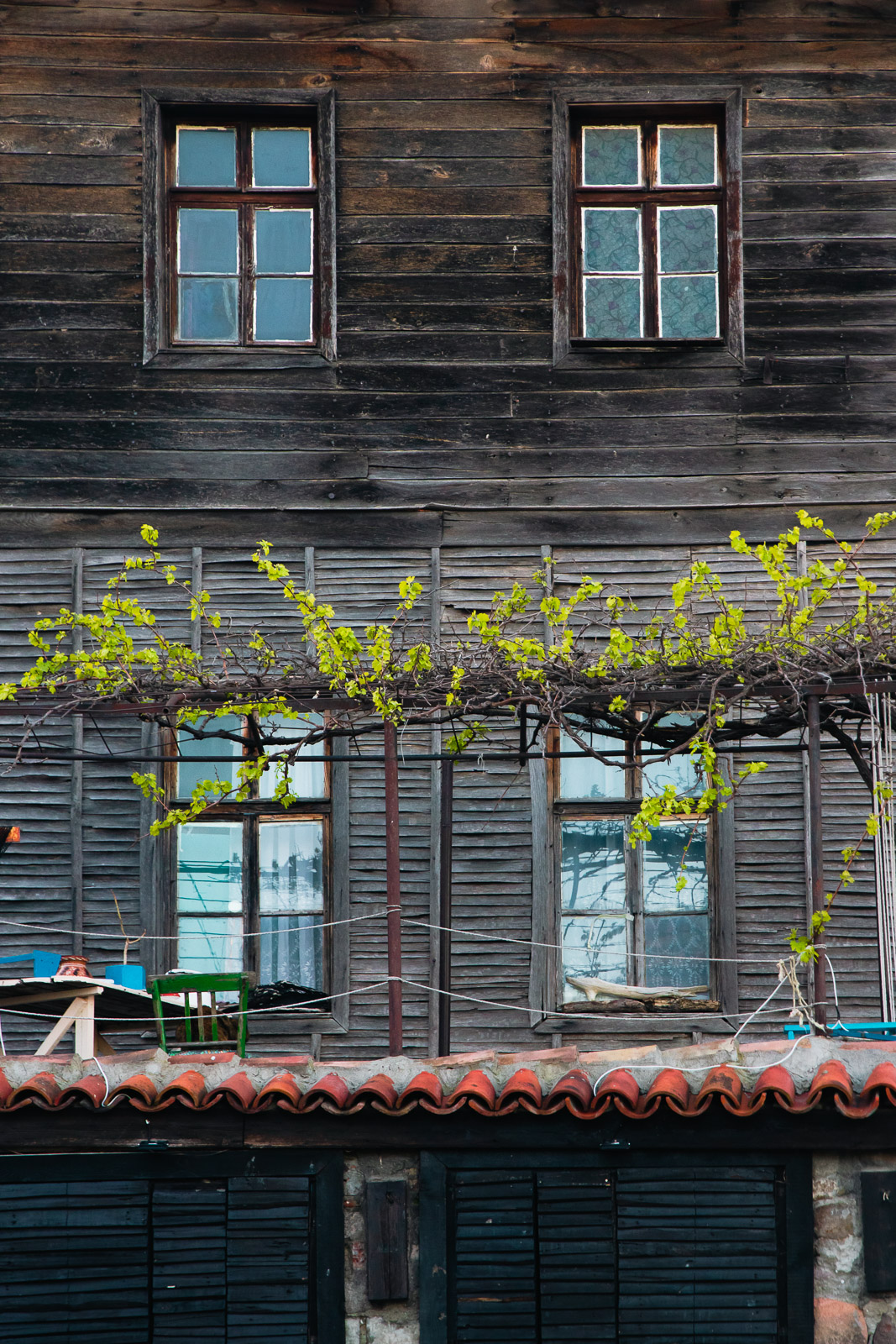
The remains include:
- Parts of a public building from the 5th century BC
- An ancient water cistern and pipeline system
- Walls from later Greek-period buildings
- A medieval necropolis used centuries afterward.
There is even a 20th-century water reservoir connected to the local fire service, which feels very Sozopol somehow – ancient infrastructure sitting directly beside relatively recent everyday life.
The site was restored in 2010 and works best as a quick stop while walking through the old town rather than a destination on its own.
9. Church of Saint George the Victorious
The Church of Saint George is one of the main active churches in Sozopol Old Town and has served an important religious role in the city for centuries.
The current building stands on the foundations of an early medieval monastery that once functioned as the seat of the Sozopol metropolitan bishop. North of the church courtyard, visitors can still see exposed remains of a large medieval basilica dating between the 10th and 17th centuries.

Inside, the church preserves several important religious objects, including:
- 19th-century icons
- Relics connected to Saint Andrew, Saint Nicholas, and Saint Ivan of Rila
- A fragment believed to come from the Holy Cross.
During the winter period (from early November until May 6) the relics of Saint John the Baptist are kept here, while the Church of Saints Cyril and Methodius remains closed for the season.
10. Archaeological site “The Old Metropolis”
The Old Metropolis is the largest medieval church complex in Sozopol and one of the clearest reminders that Christianity reached this coast very early.
The site was once the seat of the Sozopol bishopric and centered around a large three-aisled basilica, parts of which are still visible today through the restored arches and ruins.
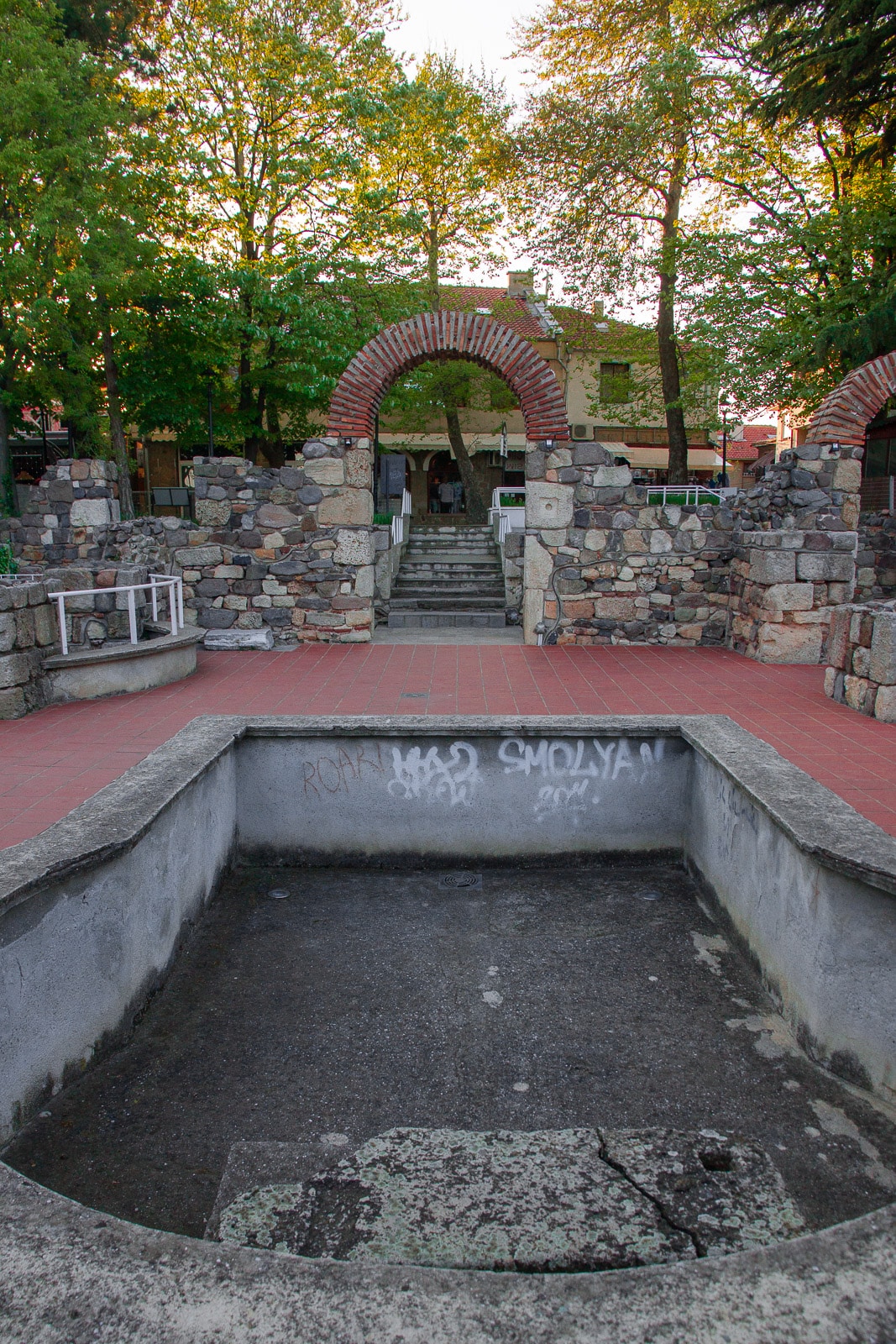
Around the church, archaeologists uncovered traces of:
- A monastery complex
- A baptistery
- Water cisterns
- Storage buildings
- A necropolis with more than 500 graves.
Like much of Sozopol, the site sits directly on top of older civilizations. Beneath the medieval church are remains from ancient Apollonia, including homes, workshops, pottery, and an older temple from the Hellenistic period.
One of the quietly strange things about Sozopol is that you regularly end up walking through layers of 2,000 years of history on the way to dinner or the beach. The Old Metropolis captures that feeling particularly well.
11. The small chapels of Sozopol
One of the quieter details that gives Sozopol Old Town its character is the number of small chapels scattered through the streets and residential corners of the peninsula.
Traditionally, each neighborhood built its own small chapel to serve as a local place for prayer. Most are simple single-room structures, woven naturally into the town rather than separated from it.
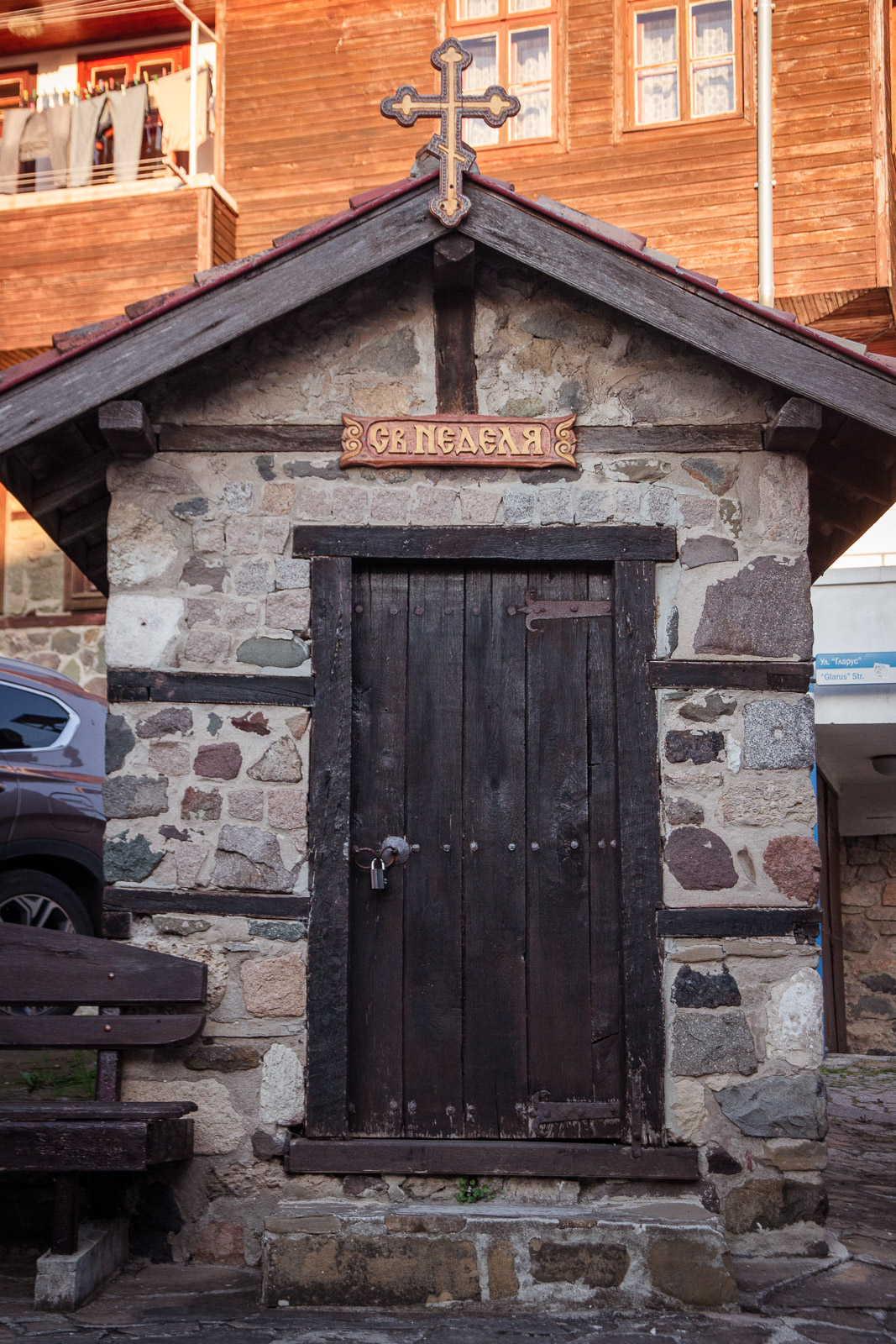
Many of these chapels are connected to old vows made by sailors and fishermen who survived storms or shipwrecks. Others are believed to have been built after religious dreams or visions. In some cases, they also mark the locations of older medieval churches that no longer exist.
Some chapels ended up enclosed within private homes and courtyards, slowly turning into semi-hidden domestic shrines. Which feels very Sozopol somehow – religion, daily life, and the sea all layered closely together.
12. Ethnographic museum
The Ethnographic Museum offers a different side of Sozopol compared to the archaeological sites. Instead of ancient ruins, it focuses on how people here actually lived along the Black Sea coast during the 18th and 19th centuries.
The museum is housed inside a restored traditional building overlooking the bay, which already feels more personal and domestic than most historical museums in town.

On the first floor, the exhibition covers everyday local life – fishing, farming, winemaking, weaving, and household traditions – with a strong focus on fishing equipment and coastal life, which shaped Sozopol for generations.
Upstairs, the displays shift toward traditional clothing and textiles from the different ethnographic groups that lived around Sozopol and Strandzha.
One of the more memorable sections explores traditional Bulgarian weddings through ceremonial costumes, woodcarving, photographs, and marriage documents. It feels less like a formal museum display and more like stepping briefly into somebody’s family history.
13. Port Sozopol (Fishing Port)
The fishing port in Sozopol Old Town sits directly opposite St. Kirik Island and still preserves part of the atmosphere that made the town famous long before tourism arrived.
Here, old wooden fishing boats float beside expensive modern yachts, which is probably the most accurate visual summary of modern Sozopol you can get.
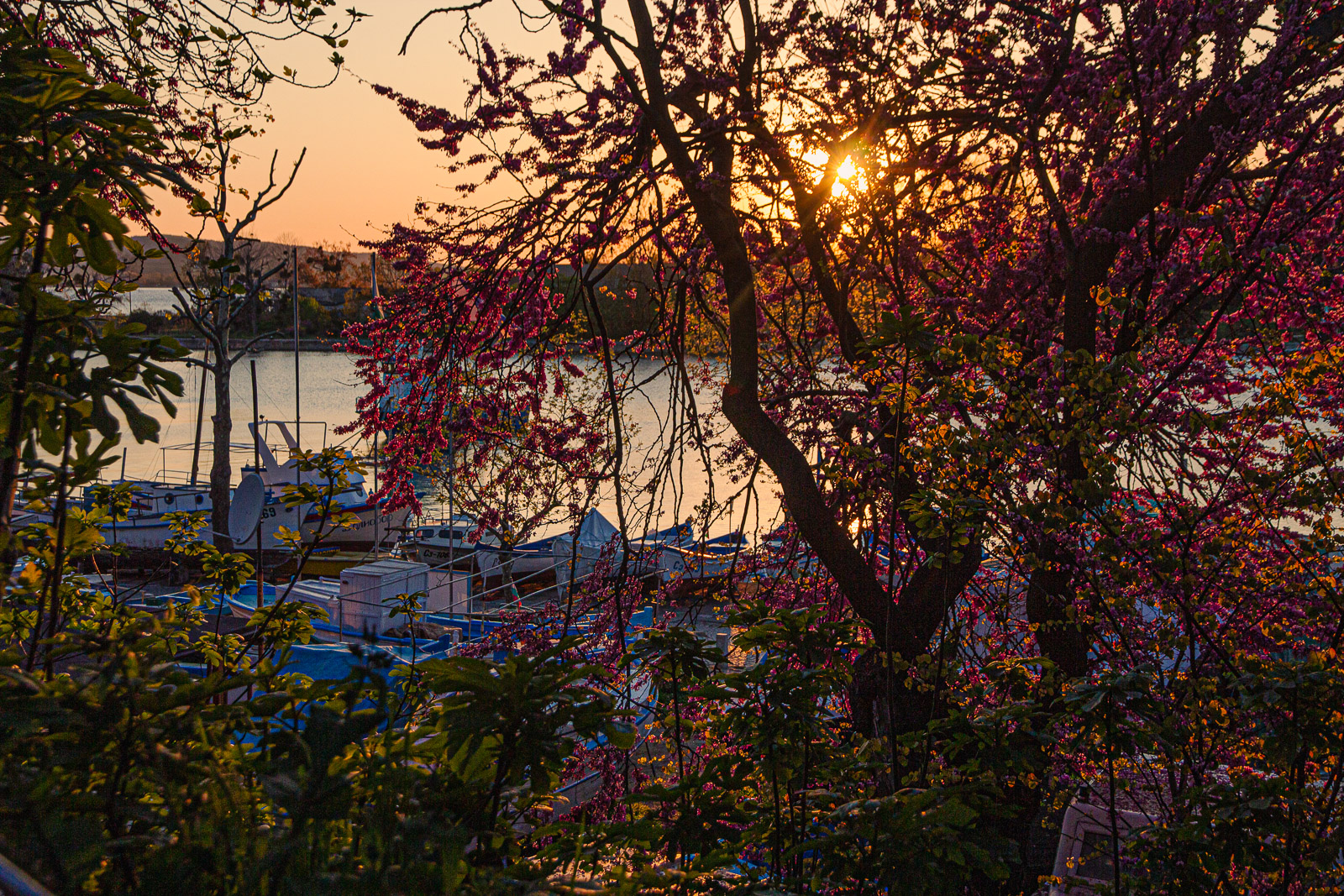
The port is also where most boat tours depart from.
Common routes include:
- Short cruises around Old and New Sozopol
- Trips to St. Ivan Island with swimming stops
- Ferry rides toward Nessebar
- And the occasional party boat during peak summer season.
From the harbor, you get open views toward St. Ivan Island, St. St. Kirik and Julita Island, the old school building, and some of the better sunset spots in town. Nearby, toward the road leading past Mussel Beach, there are also guided sea kayaking tours available during summer.
14. St. Kirik and Julita Island
St. Kirik and Julita is the connected peninsula you see beside the fishing port, linked to Sozopol Old Town by the narrow road between the harbor and Mussel Beach. The large abandoned building on it is the former fishing school – one of the most recognizable landmarks in the area.
The island takes its current name from a medieval monastery that existed here between the 11th and 14th centuries. But the site is much older than that.
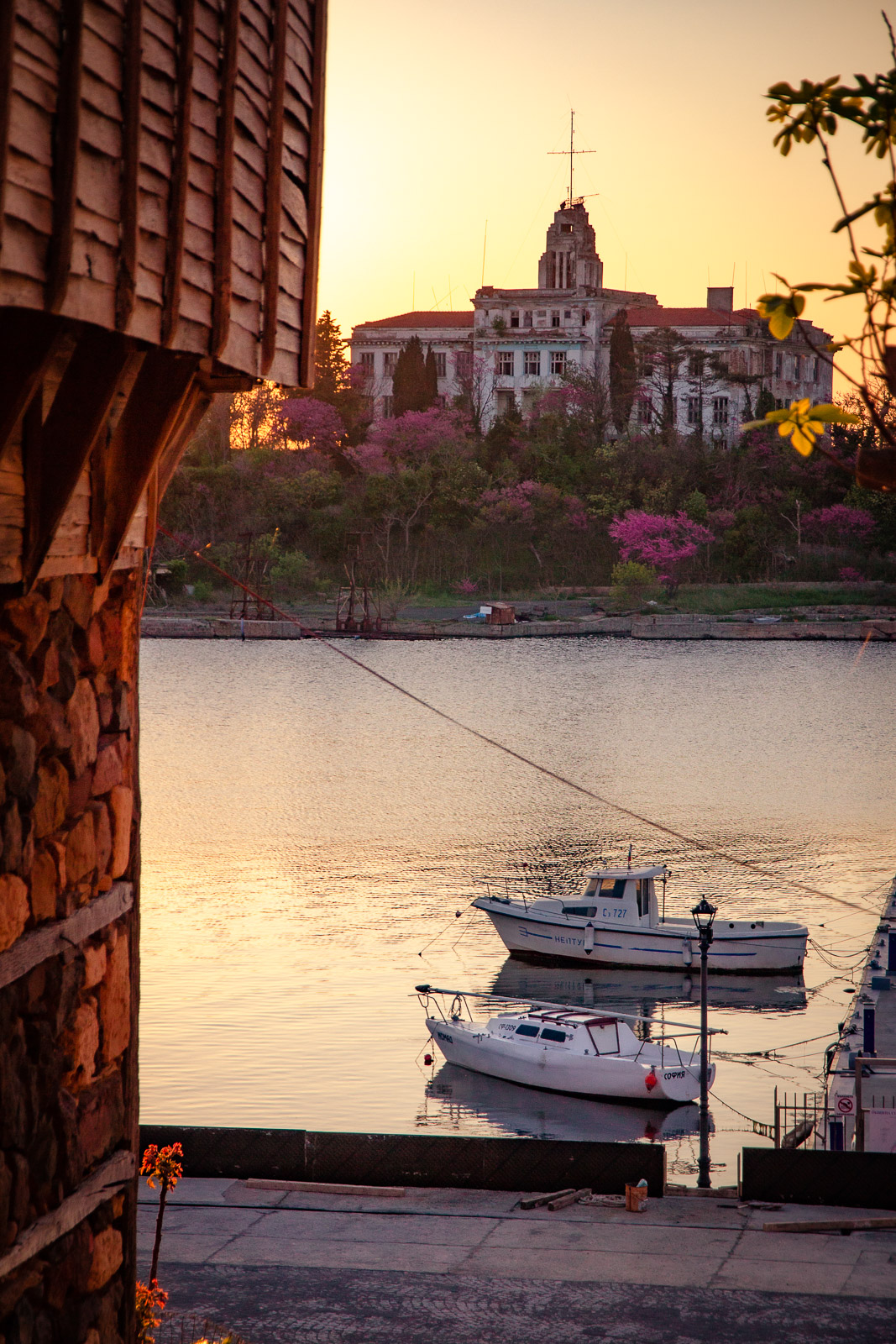
Archaeological excavations suggest this may have been the original core of ancient Apollonia Pontica.
Researchers uncovered:
- Temple foundations
- Ritual areas
- Ancient water cisterns
- Greek pottery
- Marble architectural fragments
- Remains connected to the cult of Apollo.
Many historians believe this is where the famous Temple of Apollo once stood, including the enormous bronze statue described by ancient authors like Strabo and Pliny the Elder. According to historical accounts, the statue reached around 13 meters in height and dominated the ancient city skyline.
The site also shows how cultures overlapped in Sozopol over time. Alongside Greek religious remains, archaeologists found evidence of Roman-era cults and strong Thracian influence, including worship connected to the Thracian Rider.
Today, access to the island is closed due to ongoing excavations and restoration work. Even pedestrians are not allowed through the barrier, so there is little point walking all the way to the entrance expecting to visit it.
15. Monastery of Saint John the Baptist
If you decide to take a boat to St. Ivan Island, the main historical site there is the Monastery of Saint John the Baptist.
The island lies about one kilometer from the coast of Sozopol and can only be reached by water. Despite its small size, it once hosted a major medieval monastery complex and what is considered the earliest Christian church in this part of the Bulgarian Black Sea coast.
Today, only parts of the large basilica remain visible, mainly sections of the altar and outer walls, but the site can still be visited.
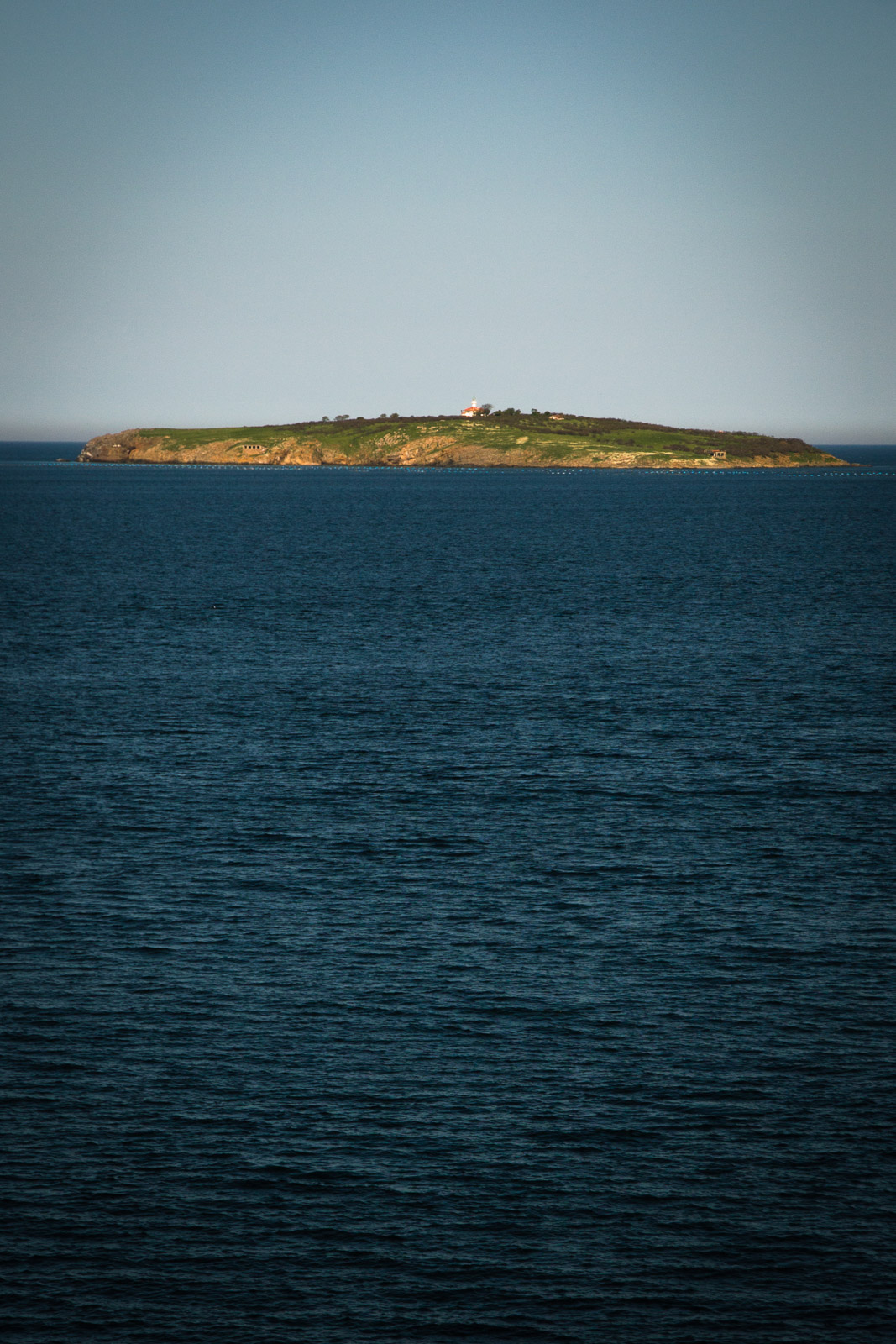
St. Ivan Island became internationally known after archaeologists discovered the marble reliquary believed to have contained relics of Saint John the Baptist. Nearby, they also uncovered a small stone box with an inscription describing the transfer of the relics to the island by a man named Thomas.
The discovery transformed the island from an archaeological site into one of Bulgaria’s better-known religious pilgrimage destinations almost overnight.
16. Church of the Holy Mother of God
The Church of the Holy Mother of God is the oldest active church on the Bulgarian Black Sea coast, dating back to 1482.
Like many churches built during the Ottoman period, the structure is partially sunk below ground level which is a common architectural solution for Christian churches at the time. Inside the altar area, remains of an older medieval church are still preserved.
From the outside, the building blends naturally into the old town with facades resembling traditional Sozopol houses.
The interior is what makes it memorable:
- Detailed wood carvings
- An ornate iconostasis from the late 18th century
- And a richly decorated bishop’s throne and pulpit that stand out even among Sozopol’s many historic churches.
17. Exhibition “Old Sozopol”
The “Old Sozopol” exhibition is housed inside Dukov House, a restored traditional building recognized as a local architectural monument.
The exhibition occupies the entire second floor and focuses mainly on archaeological discoveries from recent excavations around Sozopol Municipality. Alongside the artifacts, the collection also includes old icons and artworks showing how Sozopol changed from the early 20th century into modern times.
Compared to the larger Archaeological Museum, this exhibition feels smaller and more personal, with more emphasis on the town itself rather than only ancient Apollonia.
18. Yani Hrisopulos art gallery
The Yani Hrisopulos Art Gallery is located inside the old school building overlooking the sea – one of the more recognizable buildings in Sozopol Old Town.
The permanent exhibition spans two floors and includes around 300 works of painting, graphics, and sculpture. One of the highlights is the collection of marine paintings by Prof. Alexander Mutafov, among the first Bulgarian artists to focus heavily on seascapes.
There is also a dedicated section for works by Sozopol artists Yani Hrisopulos and Petar Katerkov, centered around depictions of old Sozopol before mass tourism changed much of the coastline.
19. Northern fortress wall
The Northern Fortress Wall dates back to the second half of the 6th century and once protected the harbor area positioned between St. Ivan Island and St. St. Kirik and Julita Island.
Compared to the busier southern side of the old town, this area usually stays quieter, which makes it a good place to slow down for a while rather than rush between landmarks.
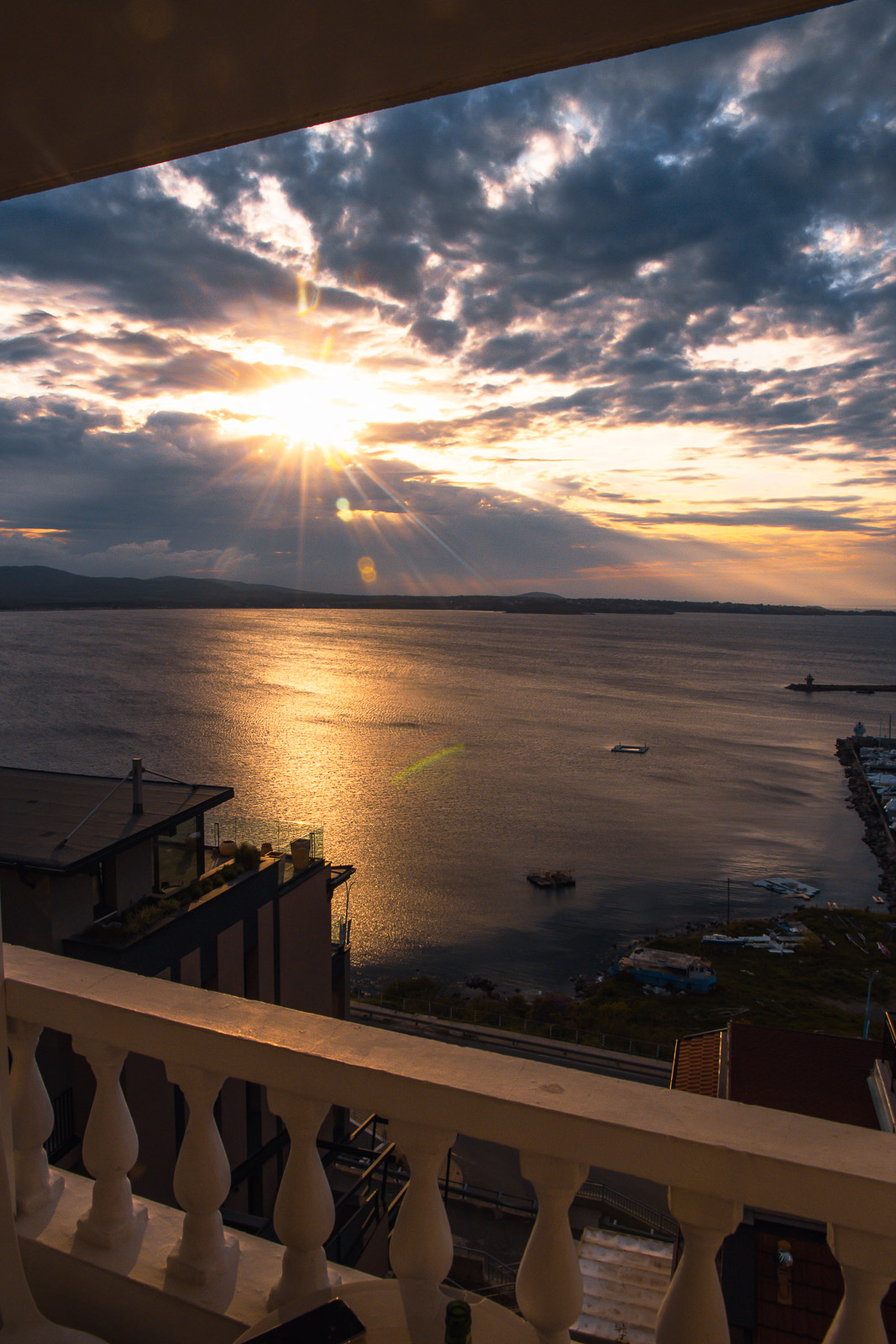
The views toward St. Ivan Island are especially good around sunset, when fishing boats and small tour boats pass below the walls. It is one of those places in Sozopol where the historical setting and the everyday coastal atmosphere still sit together quite naturally.
20. Palikari rock
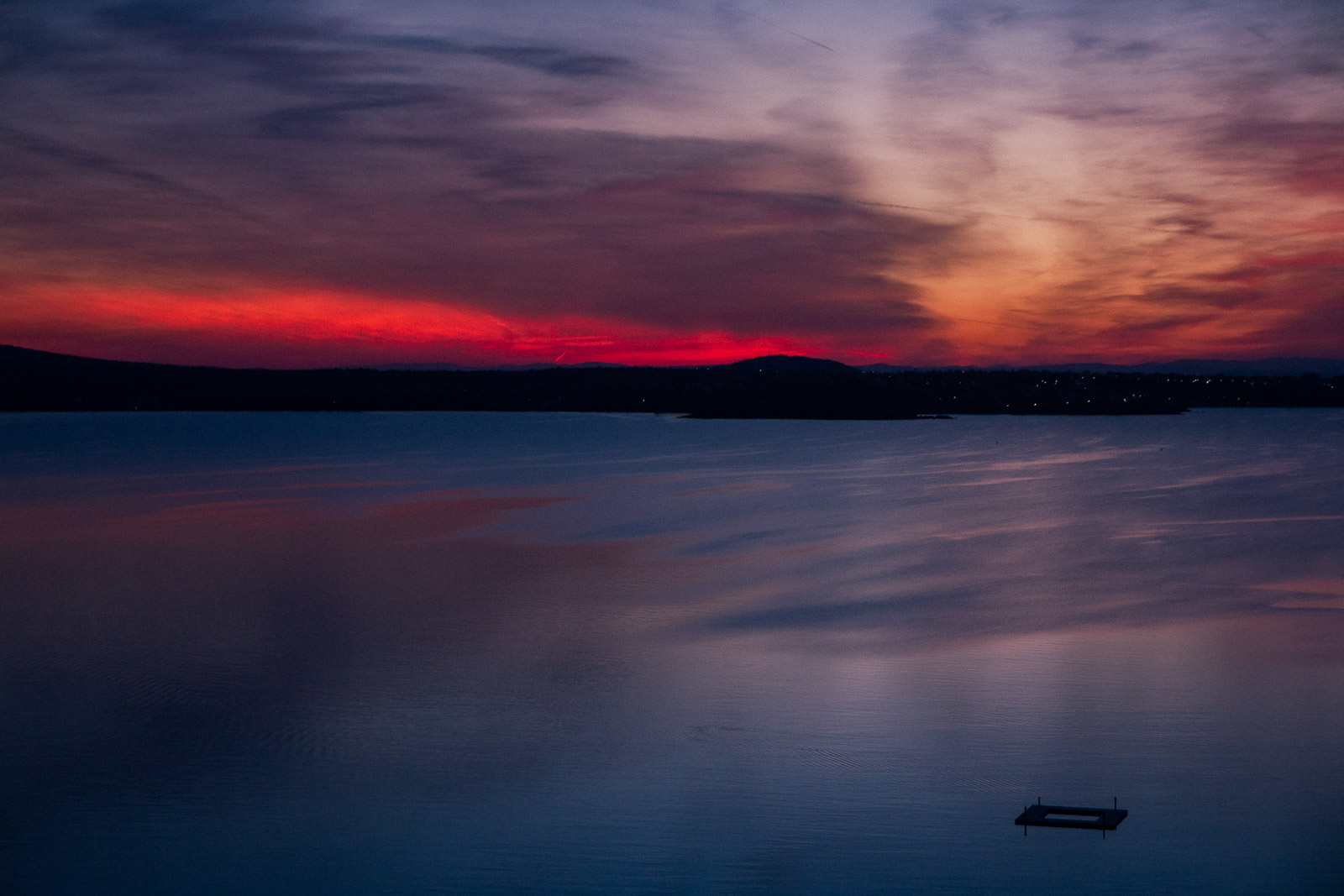
Near the Northern Fortress Wall, you’ll notice a large rock formation rising directly from the sea known as Palikari Rock.
This is one of the more recognizable natural views in Sozopol, especially during sunrise and sunset, when the light hits the rocky peninsula and the sea becomes unusually calm for a few minutes before evening crowds return to the streets.
The name “Palikari” comes from Greek and means “young man.” According to local legend, it was named after a young swimmer who regularly jumped and dived from the rock before becoming trapped in a small underwater cave.
Today, the area is mostly a place for quiet sea views, photos, and the kind of slow sitting-around that old seaside towns still do well.
21. Cape Skamni and the Monastery of the Holy Apostles
Cape Skamni is the highest and most protected part of Sozopol Old Town, which explains why different civilizations kept building on the exact same spot for centuries.
Archaeologists discovered layers from several periods here, including:
- An ancient sanctuary dedicated to Demeter and Persephone
- Later fortress walls and defensive towers
- And eventually a medieval Christian monastery known as the Monastery of the Holy Apostles.
The site changed repeatedly over time. An ancient pagan sanctuary became part of the fortified city, then a small Christian chapel appeared here in the 11th century, followed later by a larger basilica and monastery complex that functioned until the 15th century.
Excavations also uncovered a large Christian necropolis with more than 180 burials.
One of the recurring themes in Sozopol is how naturally one era settles on top of another without fully erasing it. Cape Skamni is probably one of the clearest examples of that anywhere in the old town.
22. Art gallery Bissera
Art Gallery Bissera has existed since 1994 and feels very different from the formal museum spaces around Sozopol Old Town.
Inside, the gallery combines:
- Paintings
- Ceramics
- Graphics
- Glass art
- Photography
- Icons
- Applied arts.
But honestly, part of the experience is simply the building itself. High ceilings, stone walls, dark wood interiors, and artwork covering almost every surface give the place a slightly labyrinth-like atmosphere.

It works especially well after sunset, when the old town quiets down and the space feels less like a gallery you quickly pass through and more like somewhere you accidentally stay longer than expected.
23. Sozopol Old Town beach
Better known as Sozopol Central Beach, this is the stretch of sand directly below the old town walls, where the beach, sea, fortress remains, and town park all blend into one compact area.
During summer, the place stays busy almost constantly. Days are filled with beachgoers, while evenings shift naturally into bars, restaurants, and nightlife around the old town waterfront.

What makes the beach memorable is less the sand itself and more the setting. Swimming with medieval walls and old wooden houses rising directly behind you is not something many Black Sea towns can offer anymore.
Nessebar day trips
Explore the best day trips from Nessebar, from quiet beaches and coastal towns to nature parks and cultural sites, with practical tips on what’s actually worth your time.
Read More
Sozopol beaches
A grounded guide to the best beaches in and around Sozopol, from the busy town beaches to quieter coves, camping beaches, and wilder stretches along the southern Black Sea coast.
Read More
22 things to do in Nessebar
Nessebar is one of those places that sneaks up on you - it’s small, charming, and packed with things to see and do. From churches and cobbled streets to boat trips and wine tastings, here’s why you should add it to your Black Sea travel plans.
Read More
Nessebar Old Town
Looking for a day trip that mixes history with seaside charm? Nessebar Old Town has it all - ancient churches, cobbled streets, sea views, and plenty of cozy spots to eat and wander.
Read More
Rilska Skakavitsa Waterfall
Rilska Skakavitsa is the highest waterfall in Rila, but reaching it takes a proper mountain hike. Here’s everything you need to know before you go, from parking and trail details to the confusing bits where getting lost is surprisingly easy.
Read More
Skakavitsa Hut
Skakavitsa Hut is the oldest mountain hut in Bulgaria and one of the most interesting places to stay in northwestern Rila. Here’s everything you need to know before your visit, from hiking routes and nearby sights to the hut’s history, facilities and contact details.
Read More
Seven Rila Lakes
The Seven Rila Lakes are one of Bulgaria’s most popular mountain hikes, but don’t let the crowds fool you - this is not an easy walk in the park. Here’s everything you need to know before hiking the Seven Rila Lakes, from getting there and taking the lift to following...
Read More
Events in August 2026
Discover the best festivals, cultural events, folklore celebrations, food fairs, concerts, and local traditions happening across Bulgaria in August 2026.
Read More